
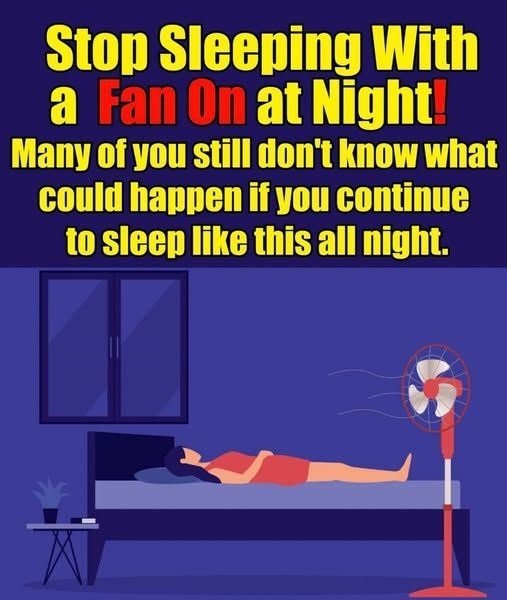
Why Using a Fan at Night Can Disrupt Your Sleep
For many people, the soft hum of a fan is the soundtrack of peaceful sleep. It cools the room, creates white noise, and makes those hot summer nights more bearable. But what if that comforting breeze is actually sabotaging your rest?
While a fan can feel like a nighttime necessity, sleep experts warn that using one all night may not always be as harmless as it seems. From drying out your sinuses to triggering allergies, that steady airflow could be quietly disrupting the very sleep it’s supposed to support.
The Hidden Downsides of Sleeping With a Fan On
Let’s be clear: fans aren’t “bad.” They have their benefits — cooling the air, improving circulation, and even helping some people fall asleep faster. But like most things, moderation and awareness are key. Here’s what can go wrong when the fan runs all night.
1. It Can Dry Out Your Sinuses and Skin
Fans circulate air continuously, which can pull moisture away from your skin, eyes, and nasal passages. If you wake up feeling congested or with a sore throat, that’s your body’s way of saying it’s dehydrated from the airflow.
Dry air = dry body. Your nose and throat are lined with delicate membranes that need moisture to trap dust and bacteria. When these areas dry out, you’re more prone to irritation, coughing, or even sinus infections over time.
2. It Can Stir Up Dust and Allergens
If your fan hasn’t been cleaned recently, it’s not just moving air — it’s moving everything in the air. Dust, pollen, and pet dander get lifted and redistributed throughout the room.
For allergy sufferers, this can mean itchy eyes, sneezing, and disrupted breathing. Even if you don’t normally have allergies, constant exposure can cause inflammation that affects the quality of your sleep.
Tip: Clean your fan blades weekly and use an air purifier to reduce airborne irritants.
3. It Might Trigger Muscle Stiffness or Sinus Pressure
Ever woken up with a stiff neck or shoulder after a night with the fan blowing directly at you? That’s not coincidence. The constant cool air can cause muscles to tense up or contract, especially if the breeze is concentrated on one area of your body.
Likewise, cold air on your face while you sleep can lead to sinus pressure or headaches for sensitive individuals. The temperature change encourages sinus congestion — making you feel groggy instead of refreshed.
4. It Interferes With Natural Temperature Cycles
Your body temperature naturally drops at night as part of the sleep process. If your environment becomes too cold or too dry from a fan running for hours, your body may struggle to maintain balance.
That can cause micro-awakenings — small, unnoticed disturbances that keep you from reaching deep, restorative sleep stages. So while you might think you’re sleeping well, your body could be restless beneath the surface.
White Noise or Distraction? The Double-Edged Sound of Fans
Many people swear by the soft hum of a fan for its white noise benefits. It masks background sounds like traffic or neighbors, helping your brain relax into a rhythm. However, there’s a catch.
If the fan’s sound fluctuates — maybe it squeaks, clicks, or vibrates slightly — it can pull your attention subconsciously throughout the night. The result? Light, fragmented sleep that leaves you feeling oddly tired in the morning.
Alternative White Noise Options
If you love the sound of your fan but not the side effects, consider alternatives:
- Use a white noise app or machine that produces steady, consistent sound without airflow.
- Try rain sounds or gentle ambient tracks, which mimic natural patterns proven to aid sleep.
- Use a humidifier alongside your fan to keep moisture balanced in the room.
How to Use a Fan Without Ruining Your Sleep
You don’t need to banish your fan completely — just be strategic. Here’s how to make it work for you, not against you.
1. Keep It Clean
Before summer hits, take apart your fan and clean the blades thoroughly. Dust buildup can seriously affect air quality and worsen allergies. Wipe it down weekly if it’s in daily use.
2. Adjust the Angle and Distance
Never point your fan directly at your body. Instead, angle it toward a wall or ceiling to circulate air evenly without blowing cold air straight onto you. Position it a few feet away and use the lowest setting necessary to stay comfortable.
3. Use a Timer
Most people fall asleep within the first 30–60 minutes of turning on a fan. Setting a sleep timer ensures it turns off once your body temperature stabilizes, reducing exposure while still giving you that cooling comfort.
4. Combine It With Smart Cooling Alternatives
Instead of relying solely on a fan, try other methods to regulate temperature:
- Lightweight, breathable bedding materials like cotton or bamboo.
- A slightly open window for natural air circulation.
- Cooling gel pillows or mattress toppers for comfort without the breeze.
Who Should Be Most Careful With Fans?
Fans affect everyone differently, but certain groups are more sensitive:
- Allergy sufferers: Dust and pollen circulation can worsen symptoms.
- People with sinus issues or asthma: Dry air can trigger discomfort or inflammation.
- Light sleepers: Noise changes and temperature shifts can disrupt rest cycles.
So… Should You Stop Using a Fan at Night?
Not necessarily. Fans are not the enemy — they just need a smarter setup. If you clean your fan regularly, angle it properly, and keep humidity balanced, it can still be part of a healthy sleep routine.
The key is listening to your body. If you wake up feeling stuffy, sore, or unusually tired, your fan may be the culprit. Try turning it off for a few nights and see if your sleep quality improves.
Final Thoughts: Comfort vs. Sleep Quality
Comfort and cool air are important — but not if they come at the cost of true rest. Sleep is when your body repairs itself, resets hormones, and strengthens the immune system. Small environmental tweaks can make a huge difference.
So tonight, before you fall asleep to that familiar hum, ask yourself: is your fan really helping you rest… or keeping your body just a little bit on edge?
Your sleep environment matters — because your body listens, even while you sleep.
