
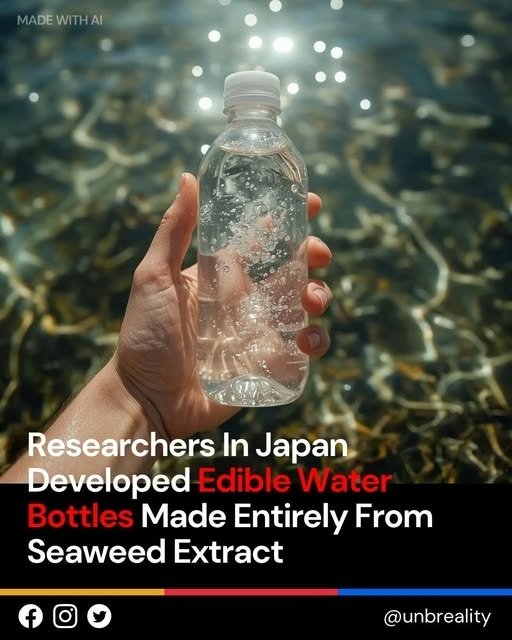
Imagine drinking water straight from a bottle — and then eating the bottle afterward. It sounds like science fiction, but in Japan, it’s fast becoming reality.
Japanese researchers have developed a groundbreaking alternative to plastic bottles: biodegradable, edible water bottles made from seaweed. These ocean-friendly creations could change how we think about packaging — and might even help save the planet from plastic pollution.
A Brilliant Solution from the Sea
Our oceans are drowning in plastic. Every year, millions of tons of plastic waste find their way into the sea, where they harm marine life and ecosystems. Even when broken down, they linger as microplastics — tiny, invisible fragments that end up in our food, water, and bodies.
That’s why this new seaweed-based water bottle innovation is such a big deal. Instead of creating more waste, it harnesses one of nature’s most abundant and renewable materials — seaweed — to produce bottles that are fully biodegradable and even edible.
How Seaweed Water Bottles Work
At the heart of this invention is a natural seaweed extract that forms a soft yet durable membrane. This membrane can hold water securely, keeping it fresh without leaking or dissolving. Once discarded, the material naturally breaks down within days — leaving behind zero harmful residues or microplastics.
What’s even more fascinating is that the bottle itself is edible. After you finish drinking, you can simply eat the packaging. It’s completely safe, tasteless, and nutrient-rich, making it a surprisingly sustainable way to stay hydrated.
Good for You, Good for the Planet
Seaweed is one of Earth’s most sustainable resources. It grows rapidly without fertilizers, fresh water, or arable land, and it absorbs carbon dioxide while producing oxygen. By turning seaweed into eco-friendly packaging, scientists are tackling two global challenges at once: plastic pollution and climate change.
Unlike petroleum-based plastics that take hundreds of years to decompose, seaweed bottles decompose naturally within days. This innovation could significantly reduce the amount of single-use plastic that ends up in landfills and oceans.
The Science Behind the Seaweed Bottle
The development process involves extracting natural polymers from seaweed — primarily alginate, a gel-like substance known for its flexibility and strength. These polymers are then molded into bubble-like shapes that can hold liquids without the need for synthetic stabilizers or chemicals.
The result is a packaging material that’s non-toxic, biodegradable, and safe to consume. It can withstand moderate handling and can be flavored or colored naturally, offering endless customization possibilities for brands and consumers alike.
Inspired by Nature, Perfected by Science
This invention reflects a growing global trend toward biomimicry — designing technology inspired by nature. Just as fruit peels protect and preserve their contents, seaweed membranes serve as a natural, compostable shell for water and beverages.
By studying how nature packages things, scientists are reimagining how humans can do the same — without leaving waste behind.
A Small Innovation with a Massive Impact
Switching to edible water bottles might seem like a small step, but the potential impact is enormous. Consider this: the world uses about 1 million plastic bottles every minute. Most of them are never recycled. If even a fraction of that consumption shifts toward biodegradable options, the reduction in waste would be transformative.
Japan’s seaweed technology could inspire industries worldwide — from beverage companies to cosmetic brands — to rethink how products are packaged, transported, and consumed.
Leading the Way in Sustainable Innovation
Japan has long been a leader in environmental technology. From recycling systems to energy-efficient transport, the country continues to pioneer eco-friendly solutions that balance progress with preservation.
Now, with edible seaweed water bottles, Japan is pushing the boundaries of sustainability once again — showing that innovation doesn’t have to come at the planet’s expense.
Challenges Ahead
While the promise of edible bottles is exciting, there are still practical challenges to overcome. Scaling production, ensuring hygiene, and making the product cost-effective for mass markets are some of the hurdles researchers are actively addressing.
Still, the technology is advancing quickly, and interest from global investors and eco-conscious brands is growing. With continued development, these bottles could soon appear in vending machines, cafes, and supermarkets across the world.
Why Seaweed Is the Future of Sustainability
Beyond water bottles, seaweed is being explored as a base material for biodegradable packaging, straws, and food containers. It’s even being used in fashion and construction. The possibilities are nearly endless.
By integrating seaweed-based solutions into daily life, humanity could drastically cut down on plastic use while nurturing healthier oceans and ecosystems.
And unlike other materials, seaweed doesn’t compete with food crops or require deforestation — making it one of the most planet-friendly materials we have.
The Bigger Picture: A Plastic-Free Future
The story of Japan’s edible seaweed bottle is more than just a cool invention — it’s a symbol of hope. It reminds us that human creativity can solve even the biggest environmental challenges when guided by nature.
Every time we choose sustainable innovation over convenience, we take a small but powerful step toward a plastic-free future. And sometimes, that step begins with something as simple as drinking water — differently.
Final Thoughts
As climate change and pollution continue to threaten our planet, eco-friendly inventions like Japan’s seaweed water bottle shine as a beacon of progress. They prove that sustainability doesn’t mean sacrifice — it means smarter, cleaner, and more compassionate choices.
From the ocean, back to the ocean — this innovation completes the natural cycle beautifully. It’s not just technology. It’s harmony.
Would you drink from — and eat — your next water bottle? The future might just taste like seaweed.
#SustainableInnovation #PlasticFreeFuture #SeaweedTechnology #EcoFriendly #GreenInnovation #ZeroWaste #OceanFriendly
Japan’s Seaweed Water Bottles: The Edible Innovation That Could End Plastic Waste
Imagine drinking water straight from a bottle — and then eating the bottle afterward. It sounds like science fiction, but in Japan, it’s fast becoming reality.
Japanese researchers have developed a groundbreaking alternative to plastic bottles: biodegradable, edible water bottles made from seaweed. These ocean-friendly creations could change how we think about packaging — and might even help save the planet from plastic pollution.
A Brilliant Solution from the Sea
Our oceans are drowning in plastic. Every year, millions of tons of plastic waste find their way into the sea, where they harm marine life and ecosystems. Even when broken down, they linger as microplastics — tiny, invisible fragments that end up in our food, water, and bodies.
That’s why this new seaweed-based water bottle innovation is such a big deal. Instead of creating more waste, it harnesses one of nature’s most abundant and renewable materials — seaweed — to produce bottles that are fully biodegradable and even edible.
How Seaweed Water Bottles Work
At the heart of this invention is a natural seaweed extract that forms a soft yet durable membrane. This membrane can hold water securely, keeping it fresh without leaking or dissolving. Once discarded, the material naturally breaks down within days — leaving behind zero harmful residues or microplastics.
What’s even more fascinating is that the bottle itself is edible. After you finish drinking, you can simply eat the packaging. It’s completely safe, tasteless, and nutrient-rich, making it a surprisingly sustainable way to stay hydrated.
Good for You, Good for the Planet
Seaweed is one of Earth’s most sustainable resources. It grows rapidly without fertilizers, fresh water, or arable land, and it absorbs carbon dioxide while producing oxygen. By turning seaweed into eco-friendly packaging, scientists are tackling two global challenges at once: plastic pollution and climate change.
Unlike petroleum-based plastics that take hundreds of years to decompose, seaweed bottles decompose naturally within days. This innovation could significantly reduce the amount of single-use plastic that ends up in landfills and oceans.
The Science Behind the Seaweed Bottle
The development process involves extracting natural polymers from seaweed — primarily alginate, a gel-like substance known for its flexibility and strength. These polymers are then molded into bubble-like shapes that can hold liquids without the need for synthetic stabilizers or chemicals.
The result is a packaging material that’s non-toxic, biodegradable, and safe to consume. It can withstand moderate handling and can be flavored or colored naturally, offering endless customization possibilities for brands and consumers alike.
Inspired by Nature, Perfected by Science
This invention reflects a growing global trend toward biomimicry — designing technology inspired by nature. Just as fruit peels protect and preserve their contents, seaweed membranes serve as a natural, compostable shell for water and beverages.
By studying how nature packages things, scientists are reimagining how humans can do the same — without leaving waste behind.
A Small Innovation with a Massive Impact
Switching to edible water bottles might seem like a small step, but the potential impact is enormous. Consider this: the world uses about 1 million plastic bottles every minute. Most of them are never recycled. If even a fraction of that consumption shifts toward biodegradable options, the reduction in waste would be transformative.
Japan’s seaweed technology could inspire industries worldwide — from beverage companies to cosmetic brands — to rethink how products are packaged, transported, and consumed.
Leading the Way in Sustainable Innovation
Japan has long been a leader in environmental technology. From recycling systems to energy-efficient transport, the country continues to pioneer eco-friendly solutions that balance progress with preservation.
Now, with edible seaweed water bottles, Japan is pushing the boundaries of sustainability once again — showing that innovation doesn’t have to come at the planet’s expense.
Challenges Ahead
While the promise of edible bottles is exciting, there are still practical challenges to overcome. Scaling production, ensuring hygiene, and making the product cost-effective for mass markets are some of the hurdles researchers are actively addressing.
Still, the technology is advancing quickly, and interest from global investors and eco-conscious brands is growing. With continued development, these bottles could soon appear in vending machines, cafes, and supermarkets across the world.
Why Seaweed Is the Future of Sustainability
Beyond water bottles, seaweed is being explored as a base material for biodegradable packaging, straws, and food containers. It’s even being used in fashion and construction. The possibilities are nearly endless.
By integrating seaweed-based solutions into daily life, humanity could drastically cut down on plastic use while nurturing healthier oceans and ecosystems.
And unlike other materials, seaweed doesn’t compete with food crops or require deforestation — making it one of the most planet-friendly materials we have.
The Bigger Picture: A Plastic-Free Future
The story of Japan’s edible seaweed bottle is more than just a cool invention — it’s a symbol of hope. It reminds us that human creativity can solve even the biggest environmental challenges when guided by nature.
Every time we choose sustainable innovation over convenience, we take a small but powerful step toward a plastic-free future. And sometimes, that step begins with something as simple as drinking water — differently.
Final Thoughts
As climate change and pollution continue to threaten our planet, eco-friendly inventions like Japan’s seaweed water bottle shine as a beacon of progress. They prove that sustainability doesn’t mean sacrifice — it means smarter, cleaner, and more compassionate choices.
From the ocean, back to the ocean — this innovation completes the natural cycle beautifully. It’s not just technology. It’s harmony.
Would you drink from — and eat — your next water bottle? The future might just taste like seaweed.
#SustainableInnovation #PlasticFreeFuture #SeaweedTechnology #EcoFriendly #GreenInnovation #ZeroWaste #OceanFriendly
