
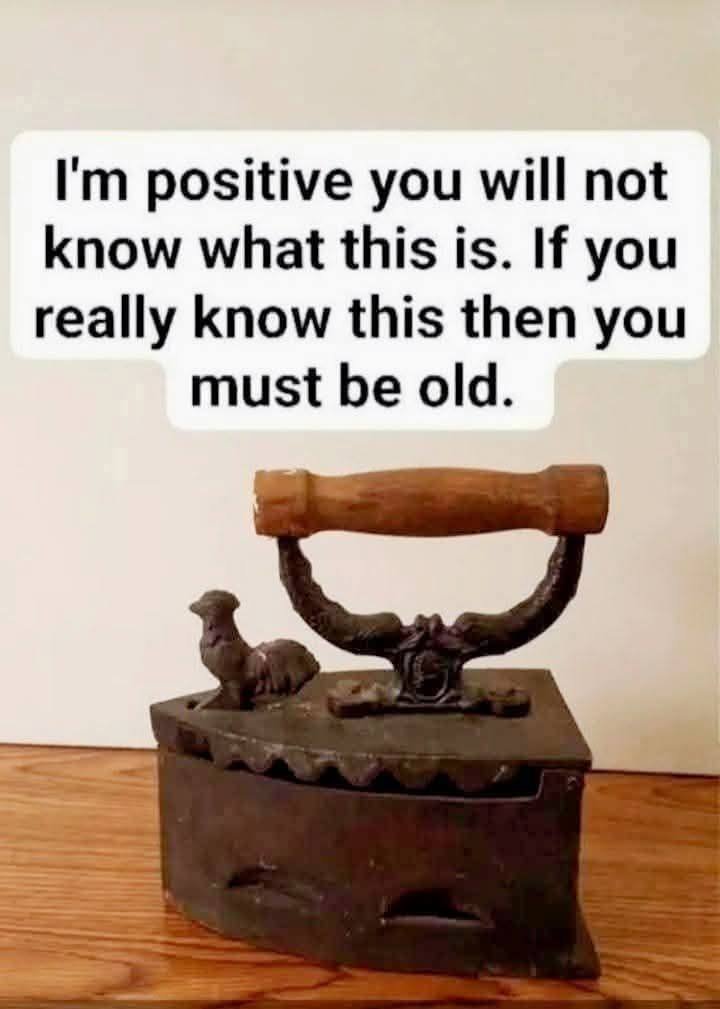
🪔 The Forgotten Iron: A Tribute to the Charcoal Press of Yesteryear
Before the days of steam irons, electricity, and smart laundry gadgets, there existed a humble yet powerful tool — the charcoal iron, also known as the coal press or box iron.
It was made of solid metal, heavy enough to tame the most stubborn wrinkles, and heated not by wires or circuits but by burning coals placed directly inside its belly.
To many, this iron wasn’t just a household object — it was a symbol of care, craftsmanship, and tradition.
Today, as modern life races forward, the charcoal iron stands quietly in antique shops and rural homes, a relic of simpler times that still holds a deep emotional resonance.
🔥 A Brief History of the Charcoal Iron
The history of ironing dates back over a thousand years. Before electricity, people worldwide used heated stones, metal pans, or even sand-filled tools to smooth fabrics.
The charcoal iron became a revolution in the late 19th and early 20th centuries.
It featured a hollow metal body with a hinged lid and small air vents on the sides. Inside, glowing pieces of charcoal kept the iron hot while the handle — usually made of wood — protected the user from the heat.
In many parts of Asia, Africa, and Europe, this tool was a common sight in homes, tailor shops, and marketplaces. The rhythmic movement of the iron gliding over fabric, mixed with the faint aroma of charcoal smoke, was part of daily life.
👕 More Than a Household Tool
For generations, ironing was an act of love and pride.
In small towns and villages, mothers would prepare school uniforms with a charcoal press before sunrise. Tailors and launderers carried their irons from house to house, offering freshly pressed clothes for weddings, festivals, or Sunday gatherings.
Each iron had its own character — the weight, the warmth, the careful balance of coal inside. Using it required both skill and patience.
Too much heat could burn the cloth; too little would leave wrinkles behind. Skilled hands knew exactly when to blow on the coals or lift the lid to feed new charcoal pieces, creating a perfect temperature.
🖤 The Art of Using a Charcoal Iron
Operating a charcoal press was an art form in itself. Here’s how it was done:
- Prepare the charcoal: Small lumps were heated until glowing red, then placed carefully inside the iron’s hollow chamber.
- Adjust the airflow: The tiny side vents allowed oxygen to keep the coals burning evenly. Too much air, and it would overheat; too little, and the iron cooled too soon.
- Test the temperature: Many would sprinkle a drop of water on the iron’s base — if it sizzled gently, it was ready.
- The pressing: Fabrics were laid flat, and with slow, firm strokes, the iron worked its magic. Steam rose gently, carrying the scent of clean cotton and charcoal through the air.
In a way, the process was meditative — a rhythm of heat, patience, and care.
🌍 The Charcoal Iron Around the World
While modern electric irons quickly replaced charcoal models in cities, they remain alive in many rural regions even today.
In India, Nigeria, Morocco, and parts of the Philippines, charcoal irons are still used by street vendors and traditional launderers who rely on their reliability and low cost.
Each country gave the tool its own personality:
- In India, it’s often called “coal press” or “istree”, and some families still use it for special garments.
- In West Africa, it’s a proud symbol of honest labor, still used daily in small ironing kiosks.
- In Europe, antique collectors treasure these irons as rustic décor — reminders of an age before automation.
💭 The Symbolism Behind the Iron
Beyond function, the charcoal iron carries deep emotional symbolism.
It represents discipline — the patience required to heat and use it properly.
It symbolizes care — ironing clothes for loved ones, showing pride in appearance and respect for others.
And above all, it embodies connection — between past and present, between generations who valued craftsmanship over convenience.
Many people still recall the soft whoosh of the iron, the smell of hot fabric, and the satisfaction of perfectly pressed clothes. For them, it’s not just nostalgia — it’s a memory of love expressed through everyday tasks.
🪶 From Utility to Art
Today, the charcoal iron has found a new life beyond laundry.
Designers and artists repurpose these antique pieces into:
- Home décor: As vintage ornaments, paperweights, or flower vases.
- Cultural exhibits: In museums showcasing traditional craftsmanship.
- Symbolic gifts: Representing hard work, resilience, and family heritage.
Some craftsmen even restore old irons and display them proudly in heritage cafés, guesthouses, or workshops — keeping their story alive for younger generations.
⚙️ Comparing Past and Present
Modern electric irons, with steam jets, temperature control, and ceramic plates, have made pressing clothes faster and easier. But something was lost in the process.
The charcoal iron required presence — you couldn’t multitask. You had to feel the heat, listen to the coal crackle, and sense the moment it was ready. It turned a simple task into a quiet ritual of care.
In a time when everything is instant, this old iron reminds us that patience can be beautiful — and that progress doesn’t always mean replacement.
🔥 How to Preserve One Today
If you ever come across a charcoal iron in your home or at a flea market, don’t throw it away.
Here’s how you can preserve it:
- Clean it gently with a soft brush and warm water — avoid harsh chemicals.
- Dry it completely to prevent rust.
- Polish with natural oil to restore its metallic sheen.
- Display it proudly — on a shelf, desk, or corner table as a conversation piece.
It’s not just an object — it’s a piece of history, forged from fire and effort.
🌅 Final Thoughts
The charcoal press is more than an old tool — it’s a story of human ingenuity, endurance, and care. It reminds us of a time when people valued simplicity, effort, and pride in every detail of life.
While the world has moved on to modern conveniences, the spirit of that iron lives on — in every well-pressed shirt, every act of quiet dedication, and every memory of warmth shared across generations.
So the next time you see one in an antique shop or your grandmother’s trunk, pause for a moment. Imagine the glow of the coals, the smell of clean fabric, and the steady rhythm of hands that worked with love.
Because the charcoal iron isn’t just forgotten — it’s immortalized in memory.
🔍 SEO Keywords
charcoal iron history, vintage iron press, traditional ironing tools, old coal iron, antique household items, heritage craftsmanship, life before electricity, vintage home decor, retro lifestyle history, nostalgia article
Would you like me to create a matching Facebook caption + image prompt (e.g. “An old charcoal iron glowing with embers on a wooden table, morning sunlight, vintage rustic atmosphere”) to make your post go viral with the article link?
