
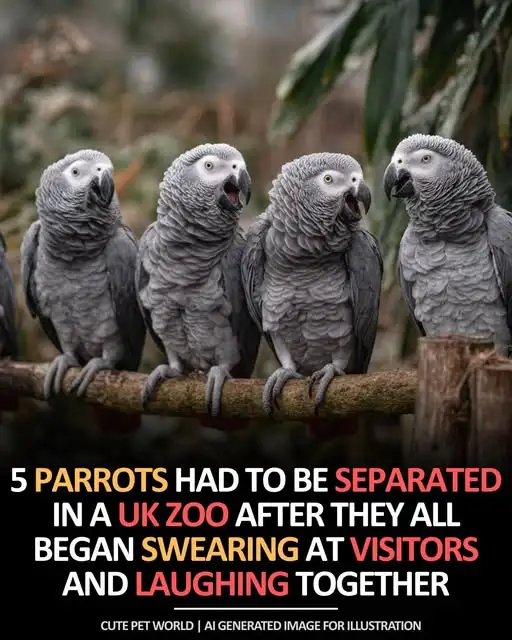
Five Swearing Parrots Made Everyone Laugh — Until They Had to Be Separated
They didn’t mean to be rude. They were just having a little too much fun.
At a zoo in England, five African grey parrots became an unexpected comedy act — shouting bad words at visitors and laughing about it. What started as harmless fun quickly turned into a viral story that left everyone both amused and amazed.
Their names sound sweet enough: Billy, Elsie, Eric, Jade, and Tyson. But together? They were a little team of troublemakers. One would shout a swear word, another would chuckle, and before you knew it, all five were laughing and mimicking each other in perfect sync. Visitors couldn’t help but burst out laughing, which only encouraged the parrots to keep going!
The Viral Story of the Swearing Parrots
The incident took place at the Lincolnshire Wildlife Park in England — a popular destination known for its large collection of parrots. The five birds were new arrivals, each donated by different owners who could no longer care for them.
At first, everything seemed normal. The parrots were settling into their new environment, socializing, and mimicking the sounds around them — as African grey parrots love to do. But soon, the zookeepers noticed something unusual. The birds had picked up some colorful vocabulary.
When visitors walked by, the parrots started swearing. And not just once. They’d take turns, shout profanities, and then laugh hysterically. The more people reacted, the funnier it became for them. It was, in a strange way, a perfect feedback loop of comedy and chaos.
Why Parrots Swear (and Why It’s So Funny)
African grey parrots are among the most intelligent birds on the planet. They can mimic human speech, tones, and even emotional expressions. When they hear people laughing after a certain sound, they associate that sound with positive attention. So if a parrot curses and people laugh — guess what? They’ll keep doing it.
It’s not that the parrots understand what they’re saying. They simply learn that certain words get a big reaction. In this case, the reaction was laughter — and for parrots, laughter equals love and attention. It became a game they all enjoyed.
They Egged Each Other On
What made this story extra funny was that the parrots didn’t just swear individually — they encouraged each other. One bird would drop a bad word, another would laugh, and then all five would join in like a comedy troupe rehearsing their best routine.
Visitors described the scene as “hilarious,” with some saying they couldn’t stop laughing. The zookeepers, while amused, realized that not every guest found it appropriate — especially families with young children.
The Zoo’s Decision: Separate the Squad
The team at Lincolnshire Wildlife Park decided to take gentle action. They separated the five parrots and moved them to different areas of the park. No one was angry — the decision wasn’t about punishment but about maintaining a family-friendly environment.
As park CEO Steve Nichols explained in interviews, “When a parrot swears, it’s very funny the first time. But if you’re with children, it’s not ideal to have a parrot telling you where to go!”
The zoo hoped that by separating them, the birds would stop encouraging each other’s bad habits and pick up new, more pleasant sounds from other parrots — maybe whistles, songs, or simple greetings instead.
Parrots: Smart, Social, and a Bit Too Human
This story is a perfect reminder of how incredibly intelligent and social parrots are. They don’t just mimic sounds; they respond to emotions, body language, and reactions. It’s part of what makes them such fascinating companions — and such effective comedians.
Scientists have found that African grey parrots have problem-solving abilities similar to young children. They can understand cause and effect, recognize words, and even form emotional bonds. So when they see humans laugh, they perceive it as a positive outcome — and they repeat the behavior.
They Learn What We Teach (Even by Accident)
Most parrot owners know this all too well. If you curse once near your bird, there’s a good chance it’ll remember that word forever — and use it at the funniest or most inappropriate moments. The Lincolnshire parrots just happened to have an audience large enough to appreciate their humor.
Life After the Separation
After being moved to different parts of the park, the five parrots reportedly settled in well. Keepers noted that they were still vocal and social, just less prone to using foul language. With time and exposure to other, better-behaved birds, they began to learn new sounds — songs, whistles, and playful chatter.
It’s likely that visitors will still hear a few cheeky words here and there, but the zoo expects the parrots’ vocabulary to evolve naturally. After all, parrots imitate what they hear most often. The more positive sounds around them, the more positive their mimicry becomes.
A Lesson in Laughter and Kindness
There’s something deeply human about this story. It reminds us that even mischief can be harmless and funny when seen with the right attitude. The keepers didn’t scold or punish the birds — they simply guided them back toward a friendlier environment.
And perhaps there’s a lesson for all of us in that: when someone behaves badly, sometimes it’s not malice — it’s imitation, environment, or misunderstanding. A bit of patience and distance can go a long way.
Why We Love Stories Like This
In a world full of heavy news, a story about five swearing parrots brings a bit of lighthearted joy. It’s funny, relatable, and somehow heartwarming. It shows how animals, like humans, thrive on connection, laughter, and learning.
Even troublemakers can be loved — just maybe from a little distance. 🦜❤️
Disclaimer: Shared for informational and entertainment purposes. Sources include The Guardian, Associated Press, CBS News, and Los Angeles Times. Images are generated using AI for illustration only.
