
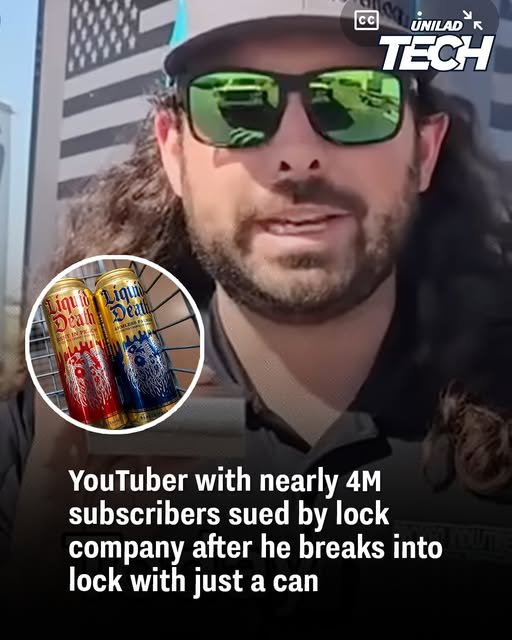
YouTuber With Nearly 4 Million Subscribers Sued After Breaking $130 Lock With a $2 Can
The Viral Lock-Breaking Video That Sparked a Lawsuit
The internet loves a good challenge — and one YouTuber took it too far. Trevor McNally, a lock-picking content creator with nearly 4 million subscribers, has found himself at the center of a legal storm after proving that a $130 lock could be broken open with nothing more than a piece of metal cut from a $2 can.
The video, which has now racked up over 10 million views, shows McNally effortlessly bypassing a supposedly heavy-duty Proven Industries lock. What started as a casual experiment quickly turned into a viral sensation — and then into a federal lawsuit.
From Hobby to Legal Headache
Trevor McNally built his YouTube following by testing, reviewing, and sometimes breaking open locks from major brands. Many followers found his videos both educational and oddly satisfying — a mix of engineering curiosity and internet spectacle.
But when McNally turned his attention to Proven Industries, a Florida-based company known for trailer hitch locks, things took an unexpected turn.
In March 2025, Proven released a promotional video titled “YOU GUYS KEEP SAYING YOU CAN EASILY BREAK OFF OUR LATCH PIN LOCK.” The clip was meant to silence critics by showing how their product could withstand hammers, crowbars, and bolt cutters.
Ironically, the video did the opposite. After one viewer tagged McNally and challenged him to test the lock, the YouTuber accepted — and that’s when the drama began.
A $2 Can vs. a $130 Lock
On April 3, McNally uploaded a video showing how he could open Proven’s Model 651 trailer hitch lock using nothing but a piece of metal cut from a Liquid Death water can.
Within seconds, the lock popped open. No hammers, no bolt cutters — just finesse and knowledge.
The clip exploded online, spreading across YouTube, Reddit, and TikTok, with users praising McNally’s skill and criticizing Proven Industries’ product claims.
But the company wasn’t amused.
The Lawsuit: Proven Industries Strikes Back
After the video went viral, Proven’s owner, Ron Lee, reportedly messaged McNally directly:
“Just wanted to say thanks — and be prepared!”
Shortly after, the company published a response video, warning that things were “about to get personal.” They claimed McNally had “prepped a perfectly cut shim” beforehand and accused him of misleading viewers.
Proven also filed multiple DMCA takedown requests, arguing that McNally’s use of their promotional footage violated copyright law. When that failed to stop him, they took things further — filing a federal lawsuit against him in June 2025.
Their claims?
- McNally defamed the company.
- He used their footage without permission.
- His content caused reputational and financial damage.
Court Ruling and Free Speech Win
When the case reached court, the Honorable Judge Mary Scriven made it clear that not every viral video deserves legal retaliation.
During the hearing, she remarked:
“This is a capitalist market. People say what they say. As long as it’s not false, they say what they say.”
Her statement underscored the fine line between criticism and defamation — especially on platforms like YouTube, where creators regularly review or “test” products in front of millions.
The ruling didn’t go Proven’s way, and the case ended up being both expensive and embarrassing for the company.
The Power (and Risk) of Viral Content
McNally’s case highlights the blurred boundaries between entertainment, education, and liability. What may start as a harmless demonstration can quickly evolve into a corporate showdown — especially when millions of dollars and brand reputations are involved.
It also shows how influencer culture can shift entire industries. One viral video can expose design flaws, reshape customer trust, and even spark lawsuits that test the limits of fair use and freedom of speech online.
Lessons for Creators and Brands
- For Creators: Be cautious when using branded content or company footage. Even fair-use claims can lead to expensive legal battles.
- For Companies: Transparency beats aggression. Trying to silence criticism often backfires — especially in the age of social media.
- For Viewers: Not every viral clip tells the whole story. Behind every 10-second video, there’s often weeks of preparation, editing, and sometimes — as this case shows — a trip to court.
Where Things Stand Now
Proven Industries reportedly had to disable comments on its social media pages due to online backlash, while McNally continues to post new videos and gain followers.
Despite the chaos, his viral “can vs. lock” experiment has become an internet legend — a story of how one YouTuber, a $2 can, and millions of curious viewers shook up an entire industry.
Final Thoughts
In the end, the Proven vs. McNally saga is more than just another internet lawsuit. It’s a reminder that digital freedom and creative expression remain powerful tools — even when they challenge corporate narratives.
As Judge Scriven said: “People say what they say.”
And when it comes to the internet, those words might be the truest defense of all.
🧠 SEO Keywords
YouTuber lawsuit, Proven Industries lock, Trevor McNally, viral lockpicking video, YouTube controversy, lock company lawsuit, DMCA fair use case
