
The Incredible Journey of Bees: How 12 Bees Make Just One Teaspoon of Honey
Have you ever looked at a spoonful of honey and wondered how something so small could hold so much wonder? Behind that golden sweetness lies an incredible story of teamwork, dedication, and nature’s quiet magic. Every drop of honey is a masterpiece created by tiny wings and endless effort — the work of bees.
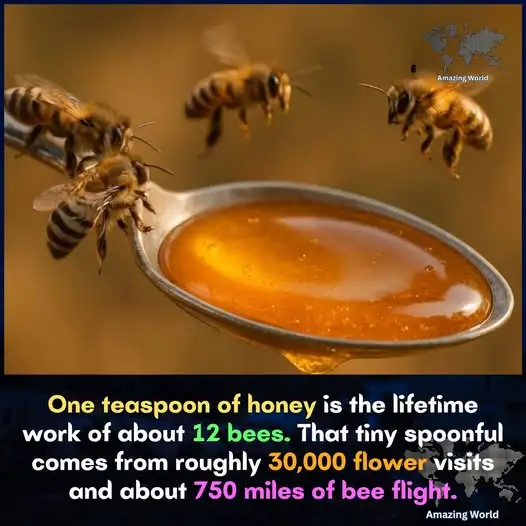
Yes, that’s right. It takes about 12 bees to make just one teaspoon of honey. When you think about it, that’s pretty amazing. Each bee contributes only a fraction, yet together, they create something humans have cherished for thousands of years — honey, nature’s golden gift.
The Hidden Effort Behind Every Drop of Honey
Honey doesn’t just appear in a jar on your kitchen shelf. It’s the result of a long, intricate process that begins in fields filled with flowers. Every day, bees leave their hives in search of nectar — the sweet liquid that flowers produce to attract pollinators.
To make that one tiny spoonful, bees must visit around 30,000 flowers. Imagine that for a moment: 30,000 blooms, each offering just a few drops of nectar. The bees tirelessly move from one flower to another, collecting, transferring, and sharing as they go. Their tiny bodies carry not only nectar but also the pollen that helps plants grow, bloom, and feed the planet.
750 Miles for a Spoonful of Sweetness
Here’s a fact that might leave you in awe — to produce a single teaspoon of honey, bees collectively travel about 750 miles. That’s roughly the distance from New York City to Nashville. All that buzzing, flying, and gathering, just for one spoon of liquid gold.
This effort shows us something extraordinary: the value of hard work and collaboration. Each bee does a little, but when they come together, the results are powerful. That’s nature’s lesson in teamwork, written in honey.
From Nectar to Honey: Nature’s Tiny Factory
Once bees collect nectar, their job is far from over. They store the nectar in a special part of their body called the “honey stomach.” When they return to the hive, they pass it to other worker bees through a process called “trophallaxis” — a fancy word for sharing food mouth-to-mouth.
These worker bees then spread the nectar inside the honeycomb and fan it with their wings to evaporate the water. Slowly, the nectar thickens and transforms into the sweet, golden honey we love. Finally, they seal the honeycomb with a thin layer of beeswax — nature’s perfect storage solution.
Everything about this process is intentional, efficient, and beautiful. It’s nature’s own production line, and every bee knows its role by heart.
Why Bees Are So Important
Bees do far more than make honey. As they visit flowers, they carry pollen from one plant to another, allowing fruits, vegetables, and seeds to grow. Without bees, many of the foods we love — from apples to almonds — simply wouldn’t exist.
According to scientists, bees help pollinate over 75% of the crops that feed humans. That’s why their work is not just impressive — it’s essential. When bee populations decline due to pesticides, habitat loss, or climate change, it’s not just honey we lose; it’s balance, biodiversity, and nourishment.
Every Buzz Counts
Every time you hear the gentle buzz of a bee, remember — that sound is life in motion. It’s the hum of a worker doing its part to sustain the planet. Even one small bee contributes to something far greater than itself.
So the next time you drizzle honey on your toast, stir it into tea, or use it to soothe a sore throat, take a moment to appreciate the journey behind it. That golden sweetness carries stories of sunlight, flowers, and the endless work of tiny wings.
Lessons We Can Learn from Bees
Bees teach us that great things come from consistent effort and collaboration. No single bee could make honey alone. It takes thousands of them working together, each doing its small part. There’s a quiet beauty in that — a reminder that progress is often the result of many little steps done with care.
They also show us how interconnected life is. By helping flowers reproduce, bees ensure the survival of countless species — including ours. In giving us honey, they also give us life.
Protecting the Bees That Protect Us
If bees disappeared tomorrow, the world would change drastically. But there are small things we can do to help. Planting bee-friendly flowers, avoiding harmful pesticides, and supporting local beekeepers are simple ways to make a difference.
Choosing raw, local honey not only supports your immune system but also supports the hardworking bees and keepers behind it. Every jar you buy from a local source helps sustain the delicate ecosystem that allows bees to thrive.
Sweetness With a Story
Honey isn’t just food — it’s a story of resilience, cooperation, and balance. Each drop is proof that nature’s smallest creatures can create something truly extraordinary when they work together. And maybe, just maybe, that’s a reminder for us too — that small actions, done consistently, can lead to beautiful results.
Final Thoughts: A Spoonful of Gratitude
Next time you enjoy honey, think about those 12 bees who made it possible. Think about the 30,000 flowers they visited and the 750 miles they traveled. Think about the invisible teamwork behind every glistening drop.
It’s easy to take honey for granted, but once you understand its story, it becomes more than a sweetener — it becomes a symbol of patience, purpose, and unity.
So, the next time you taste honey, let it remind you of the tiny heroes that make life a little sweeter — one flight, one flower, and one drop at a time.
