
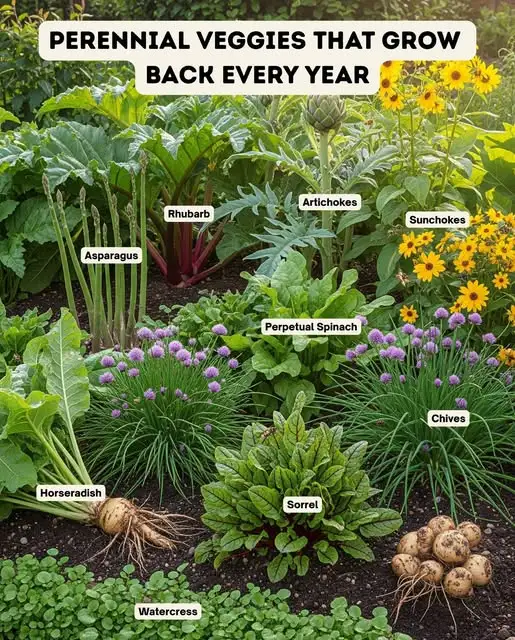
Plant Once, Harvest for Years: 9 Perennial Vegetables That Keep on Giving
Imagine planting your garden just once — and enjoying fresh, homegrown harvests year after year, without the endless replanting. Sounds like a dream, right?
Well, it’s absolutely possible when you grow perennial vegetables. These hardy plants come back each season, saving time, effort, and money — while keeping your garden alive and thriving. From the crisp spears of asparagus to the tangy stalks of rhubarb, these plants are gifts that truly keep on giving.
Why Choose Perennial Vegetables?
Most of us are used to replanting every spring — lettuce, tomatoes, beans… and on it goes. But perennial vegetables change the game. Once established, they return year after year, often stronger and more productive than before.
They also help build a healthier ecosystem in your garden. Their deep roots improve soil structure, reduce erosion, and support pollinators. Plus, they give you an earlier harvest when most annuals are still seedlings.
The Best Perennial Vegetables to Grow in Your Garden
Let’s explore some of the most rewarding perennial vegetables you can plant once and harvest for many years to come.
1. Asparagus (Zones 3–10)
Asparagus is the superstar of perennial veggies. Once it’s established, this plant can produce tender, flavorful spears every spring — for up to 20 years or more! It prefers full sun and well-drained soil.
Pro tip: Don’t harvest during the first year. Give it time to develop strong roots, and it’ll reward you for decades.
2. Rhubarb (Zones 3–8)
Known for its tart, ruby-red stalks, rhubarb is perfect for pies, jams, and desserts. It thrives in cooler climates and needs a spot with good drainage. Once planted, it spreads steadily and can last for decades with little care.
Remember: Only eat the stalks — the leaves are toxic.
3. Artichokes (Zones 7–11)
Few vegetables look as majestic as artichokes. These bold plants produce delicious, edible flower buds — and they make a stunning addition to any garden. In warm climates, they act as true perennials. In cooler zones, protect the roots during winter with mulch.
4. Sunchokes (Jerusalem Artichokes) (Zones 3–9)
Sunchokes are tall, sunflower relatives that produce nutty, crisp tubers underground. They’re easy to grow and multiply quickly, often becoming a reliable (and delicious) food source each fall.
Be warned — they spread fast, so it’s smart to give them their own space!
5. Perpetual Spinach (Zones 5–10)
Love spinach? Then you’ll adore perpetual spinach. This leafy green isn’t a true spinach, but it tastes just like it — and keeps producing leaves all season long. Simply cut what you need, and it’ll grow back again and again.
6. Chives (Zones 3–9)
Chives are the easiest perennial herbs to grow. Their mild onion flavor adds freshness to salads, eggs, and soups. Plus, their purple flowers attract bees and butterflies — making them both practical and beautiful.
7. Sorrel (Zones 4–9)
Sorrel brings a zesty, lemony kick to your kitchen. Its tender leaves are great for soups, sauces, and salads. Once established, it can survive cold winters and comes back early in spring when other greens are still dormant.
8. Horseradish (Zones 3–9)
Horseradish is bold, spicy, and unstoppable once planted. Its roots add fiery flavor to sauces and meats. This hardy plant spreads easily — so plant it where you don’t mind it taking over a bit.
9. Watercress (Zones 5–9)
If you have moist soil or a small pond, watercress is your go-to green. Its peppery leaves are rich in vitamins and thrive in damp conditions. It’s one of the healthiest greens you can grow — and it regenerates fast after harvest.
How to Care for Perennial Vegetables
Most perennial vegetables need less work than annuals, but a little care goes a long way. Here are some tips to keep them healthy year after year:
- Choose the right spot: Most perennials prefer sunny, well-drained areas.
- Feed the soil: Add compost every year to keep nutrients balanced.
- Divide mature plants: Every few seasons, divide and replant to keep them vigorous.
- Mulch in winter: A thick mulch layer protects roots from frost and weeds.
The Long-Term Benefits of Growing Perennials
Planting perennial vegetables isn’t just about convenience — it’s about sustainability. By letting nature do the work, you reduce soil disturbance, save water, and create a habitat for beneficial insects and wildlife.
And let’s be honest — there’s something magical about seeing new shoots appear in spring from the same plants you grew years ago. It connects you to the rhythm of the seasons in a deeply satisfying way.
Final Thoughts: A Garden That Gives Back
When you plant perennial vegetables, you’re investing in your future harvests — and in the health of your garden. These plants ask for little but give so much in return: flavor, nutrition, and beauty that lasts for years.
Start small. Pick one or two from this list and see how they thrive. Before you know it, you’ll have a garden that keeps feeding you — year after year.
Plant once. Harvest for years. Let nature do the rest.
