
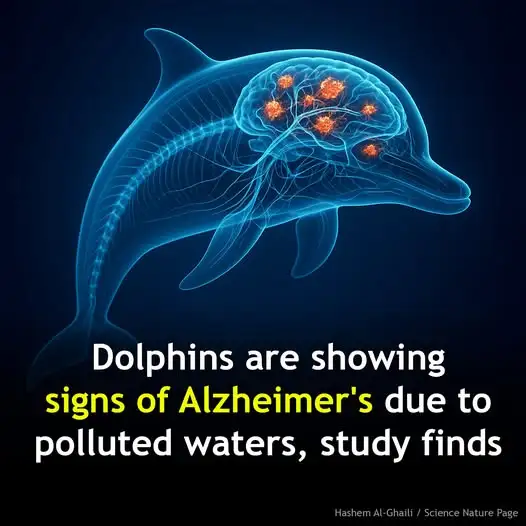
Dolphins Are Showing Signs of Alzheimer’s Due to Polluted Waters
Meta Description: Dolphins are developing Alzheimer’s-like symptoms from polluted waters. Scientists link brain damage to toxic algae blooms caused by pollution and climate change.
Imagine being lost at sea, confused and disoriented, unable to recognize the waters you’ve called home your entire life. This isn’t a scene from a movie—it’s the terrifying reality facing some of the ocean’s most intelligent creatures right now.
Dolphins, the playful mammals we’ve always admired for their remarkable intelligence, are showing alarming signs of Alzheimer’s disease. And the reason? Our polluted waters are poisoning their brains.
The Shocking Discovery That Changed Everything
Scientists working along Florida’s Indian River Lagoon made a discovery that sent chills down their spines. When they examined the brains of 20 stranded bottlenose dolphins, they found something they never expected to see in marine animals.
These dolphin brains looked eerily similar to human brains affected by Alzheimer’s disease.
The researchers found amyloid plaques and tau tangles—the same telltale signs that doctors look for when diagnosing Alzheimer’s in humans. These aren’t just minor similarities. The damage was striking, profound, and heartbreaking.
But what could cause such devastating brain damage in animals that live in the ocean? The answer lies in something invisible yet deadly that’s been growing in our waters.
The Silent Killer in Our Waters
Harmful algal blooms have been increasing dramatically in recent years, fueled by pollution and rising temperatures from climate change. These blooms aren’t just unsightly green patches on the water—they’re biological time bombs.
During warm seasons, cyanobacteria and other harmful algae multiply rapidly in polluted waters. As they grow, they produce dangerous toxins that contaminate the entire marine ecosystem.
One toxin in particular caught the researchers’ attention: 2,4-diaminobutyric acid, or 2,4-DAB for short.
The Numbers Are Terrifying
When scientists measured DAB levels in dolphin brains, they couldn’t believe what they found. During algal bloom periods, dolphins carried up to 2,900 times more of this neurotoxin compared to dolphins tested outside the bloom season.
Let that sink in for a moment. Not twice as much. Not ten times as much. Nearly three thousand times more poison in their brains.
This massive exposure creates a direct and undeniable link between toxic algae blooms and the neurological damage dolphins are suffering from polluted waters.
How This Poison Destroys Dolphin Brains
The way 2,4-DAB attacks the brain is both sophisticated and devastating. It doesn’t just cause one type of damage—it launches a multi-front assault on neural health.
First, the toxin overstimulates neurons, causing them to fire excessively. Imagine your brain’s electrical system going haywire, with signals firing constantly without any way to turn them off.
The Enzyme That Keeps Our Brains Safe
Our brains—and dolphin brains—rely on a crucial enzyme called glutamate decarboxylase to keep neural activity balanced. Think of it as the brake pedal for your brain.
But when dolphins are exposed to high levels of DAB from polluted waters, this protective enzyme drops to dangerously low levels. Without enough glutamate decarboxylase, the brain loses its ability to regulate itself properly.
The consequences are severe: tremors, confusion, disorientation, and behavioral changes that mirror what we see in human dementia patients.
Genetic Chaos
The damage goes even deeper than anyone initially realized. The study revealed that DAB exposure alters over 500 genes connected to neural function and brain degeneration.
Five hundred genes. That’s not a small glitch in the system—that’s a complete rewriting of how the brain operates.
These genetic changes create a cascade of problems that progressively worsen over time, much like Alzheimer’s disease in humans.
Why Dolphins Might Be Stranding Themselves
For years, scientists have puzzled over why seemingly healthy dolphins sometimes beach themselves. The mystery has spawned countless theories, from navigation errors to illness.
Now we might finally have an answer that makes heartbreaking sense.
Dolphins showing signs of Alzheimer’s due to polluted waters may become so disoriented and confused that they lose their way at sea. Imagine forgetting how to navigate home, unable to recognize familiar coastlines or communicate effectively with your pod.
Some of these magnificent animals may strand themselves not out of choice, but because their poisoned brains can no longer tell them which way is safe.
We’re All in the Same Boat
Here’s the part that should worry every single one of us: dolphins aren’t just victims of environmental toxicity. They’re our early warning system.
These marine mammals are what scientists call “sentinel species”—animals that show us what environmental hazards might affect other creatures down the line. Including us.
The same pollutants that are giving dolphins Alzheimer’s-like symptoms exist in waterways around the world. The same climate change factors that fuel toxic algal blooms affect our drinking water sources and recreational waters.
The Human Connection
Alzheimer’s disease already affects millions of people worldwide, and cases are rising. Could environmental toxins be playing a larger role in human neurological diseases than we’ve realized?
The parallels between what’s happening to dolphins in polluted waters and the Alzheimer’s epidemic in humans are too striking to ignore.
Research like this study, published in Communications Biology by Wendy Noke Durden and her team, forces us to confront an uncomfortable truth: we’re not separate from nature. What poisons the ocean eventually comes back to affect us.
What This Means for Our Future
The discovery that dolphins are showing signs of Alzheimer’s due to polluted waters isn’t just a marine biology story. It’s a wake-up call about the interconnected nature of environmental health.
Climate change is warming our waters, creating perfect conditions for harmful algal blooms. Pollution from agricultural runoff, sewage, and industrial waste provides the nutrients these toxic algae need to explode in number.
And every year, the problem gets worse.
If we don’t address water pollution and climate change seriously, dolphins won’t be the only ones suffering from neurotoxic exposure. The same contaminated waters that are destroying dolphin brains flow into our bays, lakes, and coastal areas.
There’s Still Hope
Understanding the problem is the first step toward solving it. This groundbreaking research gives us concrete evidence of how pollution directly harms marine life—and potentially human health.
We now know that reducing nutrient pollution, controlling agricultural runoff, and addressing climate change aren’t just environmental buzzwords. They’re necessary actions to protect the health of dolphins, marine ecosystems, and ourselves.
Every action we take to clean our waters matters. Supporting better waste management, choosing sustainable products, advocating for stronger environmental protections—these aren’t small gestures. They’re essential steps toward a future where dolphins can swim in clean, safe waters again.
The dolphins showing signs of Alzheimer’s from polluted waters are sending us a message we can’t afford to ignore. The question is: will we listen before it’s too late?
The health of our oceans reflects the health of our planet—and ultimately, our own health. The time to act is now.
