
The Science of Motivation: Why Action Comes Before Inspiration
We’ve all been there — staring at a blank page, waiting for that spark of motivation to appear. We tell ourselves, “Once I feel motivated, I’ll start.” But what if science says we’ve had it backward all along?
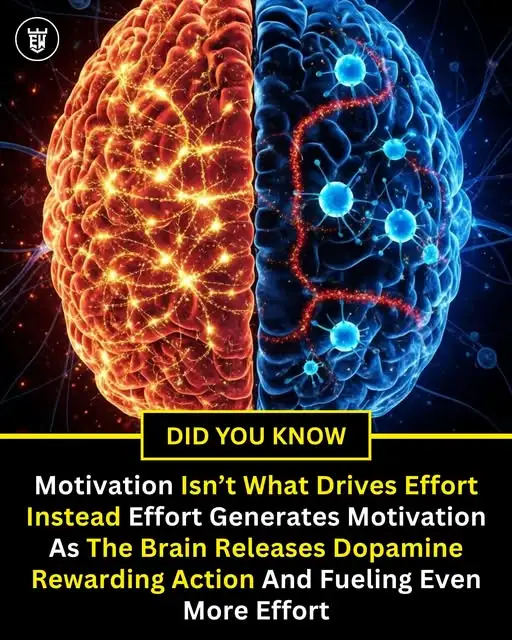
According to modern neuroscience, motivation doesn’t start action — action creates motivation. Your brain isn’t waiting for inspiration. It’s waiting for movement.
The Truth About Motivation
Most of us see motivation as the fuel that gets us going — like a spark plug that ignites the engine. But in reality, the engine starts when you turn the key. The act of beginning is what flips the switch in your brain.
When you take even a small step forward — writing one sentence, lacing up your shoes, or cleaning one corner of a messy room — your brain rewards you. It releases dopamine, the feel-good chemical that drives focus, pleasure, and reward. And here’s the secret: that dopamine motivates you to do more.
So, instead of waiting for motivation, start with action. Because once you do, the motivation follows naturally.
The Neuroscience Behind Action and Motivation
Scientists have discovered that our brains are wired for momentum. When we act, our neural circuits light up, releasing dopamine that reinforces the behavior. This creates a feedback loop:
- Action triggers dopamine.
- Dopamine increases motivation.
- Motivation fuels more action.
It’s a powerful cycle that explains why starting is often the hardest part — your brain hasn’t yet entered the loop. But the moment you take that first step, the chemistry begins to shift in your favor.
Dopamine: The Chemical of Progress
Dopamine is often misunderstood as a “pleasure” chemical. In truth, it’s more about anticipation and progress. Your brain releases dopamine not when you complete a goal, but when you’re moving toward it. That’s why even a tiny action — like opening a notebook or walking for five minutes — can feel satisfying.
This process rewires your brain to crave consistency. Over time, your body associates effort with reward, making it easier to stay disciplined and focused.
Why Waiting for Motivation Doesn’t Work
Have you ever noticed how sitting and “waiting to feel ready” just makes you feel more stuck? That’s because inaction feeds procrastination. When you stay still, your brain conserves energy, and your cortisol (the stress hormone) starts to rise. The longer you wait, the harder it becomes to move.
Meanwhile, action — even imperfect action — reduces mental resistance. It activates the brain’s prefrontal cortex, which boosts focus and decision-making. In short, doing something is what wakes up your motivation.
Small Steps, Big Shifts
One of the most powerful lessons from behavioral science is this: small steps create big change. You don’t need to climb the mountain today. Just take one step in the right direction.
Write one paragraph. Do one push-up. Organize one drawer. Every small win triggers dopamine and strengthens your motivation loop. Over time, these micro-actions compound into massive progress.
Real-World Examples of Action Before Motivation
Think of the runner who doesn’t feel like running but decides to put on their shoes anyway. Within minutes, their body warms up, their mood lifts, and suddenly they’re in motion — energized and motivated.
Or the writer who stares at a blank screen but types a single messy sentence. Before long, words start flowing. What changed? Not inspiration — biochemistry.
In both cases, movement came first, and motivation followed.
What Science Says About Momentum
Research supports this idea. A study on goal-setting found that people who simply start — writing one line of a report, setting up a workspace, or taking a single step — report significantly higher motivation and confidence afterward compared to those who keep planning without acting.
This “momentum effect” is rooted in what neuroscientists call the activation energy principle — the idea that the hardest part of any task is just starting. Once you begin, your brain and body naturally shift into a higher-energy state that sustains effort.
The Biochemical Loop of Motivation
Here’s how it works step-by-step:
- Action: You take a small, intentional step.
- Dopamine Release: Your brain rewards the effort with dopamine.
- Positive Feedback: You feel good, focused, and driven.
- Repetition: The more you act, the more dopamine you earn — and the easier it becomes.
This loop builds habits, strengthens resilience, and creates a long-term motivation system that no “pep talk” can match.
How to Create Motivation Through Action
If you often struggle with motivation, try these science-backed techniques to get started:
1. Lower the barrier to entry
Make your first step so small it feels impossible to resist. Don’t aim to “work out for an hour.” Aim to “put on your shoes and step outside.” Once you start, your brain takes over.
2. Celebrate micro-wins
Each time you act, recognize it — even if it’s small. That little internal “yes” tells your brain the action was rewarding, reinforcing the habit.
3. Create cues and triggers
Use simple cues to remind your brain it’s time to move: a playlist, a timer, or a specific workspace. Repetition turns these cues into habit signals.
4. Focus on progress, not perfection
Perfectionism kills momentum. Instead of waiting for the “perfect plan,” focus on the next right action. Progress compounds; perfection delays.
5. Move your body
Physical movement itself boosts dopamine and serotonin. A short walk, stretch, or even changing posture can kickstart the motivation loop.
Why Effort Precedes Motivation
Motivation isn’t magic — it’s movement. Your body and brain are in constant conversation. When your body acts, your brain follows with energy, focus, and reward.
This is why starting is so powerful. You’re not just changing your behavior; you’re changing your biology.
Conclusion: Stop Waiting, Start Moving
The next time you’re waiting to “feel motivated,” remember this: your brain is waiting for you to move first. Take one step, however small, and let science do the rest.
Because progress doesn’t come from inspiration — it comes from action. And the more you act, the more motivated you become.
So stop waiting for motivation to find you. Go create it.
Keywords: motivation, action creates motivation, neuroscience of motivation, dopamine, productivity, momentum, brain chemistry, mindset, habits.
