
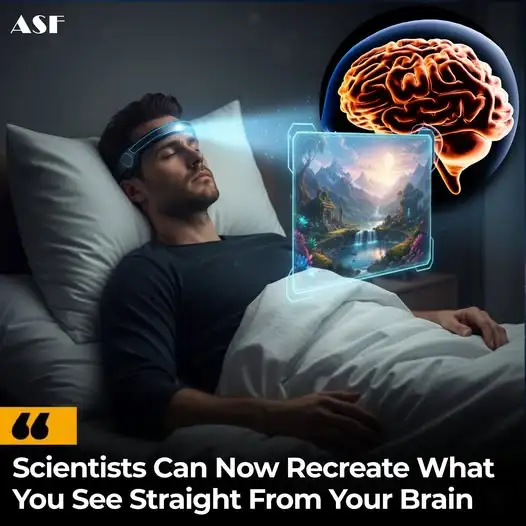
Neuroscientists Use AI to Decode Brain Activity and Visualize Thoughts
Imagine being able to “see” someone’s thoughts, or better yet, have your own thoughts transformed into pictures. It sounds like science fiction, but neuroscientists have taken a giant leap toward this extraordinary possibility. Thanks to the power of artificial intelligence, researchers have developed a groundbreaking technology that can decode brain activity and reconstruct the images people are viewing. This technology could change everything we know about the human mind, from understanding dreams to providing new insights into how we think. Let’s explore how this incredible advancement works and what it means for the future.
The Fascinating Science Behind Decoding Brain Activity
For years, scientists have been fascinated by the idea of reading and interpreting brain activity. The brain is a complex organ with billions of neurons firing in synchronized patterns, and understanding those patterns has always been a huge challenge. But thanks to advancements in functional magnetic resonance imaging (fMRI), we’re now able to track these brain signals with remarkable precision.
fMRI measures brain activity by detecting changes in blood flow. When a specific area of the brain is active, it requires more oxygen, which increases blood flow to that region. By mapping these changes, scientists can create real-time images of brain activity. But translating those signals into meaningful images has always been the next big hurdle. That’s where AI comes into play.
How AI Translates Brain Signals Into Images
Using machine learning, neuroscientists have trained artificial intelligence to recognize the patterns in fMRI data and translate them into images that closely resemble what a person is viewing. In essence, the AI is “learning” how to map brain signals to visual stimuli, creating a mental image from brain activity.
Here’s how it works: when you look at an object, your brain processes visual information in a specific way. fMRI captures the blood flow in the brain, which the AI then analyzes. By comparing these patterns to images the AI has already learned, it can reconstruct a picture that matches what the person is seeing or even imagining. Think of it as a high-tech “mind reader” that uses data to turn thoughts into images.
The Impact on Understanding Dreams and the Human Mind
What makes this breakthrough so exciting is its potential to deepen our understanding of how the brain works. Dreams, for example, have always been a mysterious part of human experience. Now, thanks to this technology, scientists may one day be able to “see” what people are dreaming about, offering a glimpse into the unconscious mind.
This could lead to profound insights into memory, consciousness, and the way our brains process emotions and experiences. Understanding the images that emerge in our minds, whether during waking hours or in sleep, could open up new frontiers in neuroscience, psychology, and even psychiatry.
Applications Beyond Dream Decoding
While decoding dreams is an exciting prospect, the potential applications of this technology go far beyond that. In fact, it could revolutionize the way we approach brain-related health issues, from helping those with neurological disorders to transforming the way we communicate.
Helping Patients with Neurological Disorders
One of the most promising applications of this AI-powered brain decoding technology is in the treatment of neurological conditions. For patients who have suffered from brain injuries, strokes, or conditions like locked-in syndrome (where they are conscious but unable to move or speak), this technology could offer a new way to communicate.
By interpreting their brain activity and turning it into visual representations, doctors could gain a better understanding of their patients’ thoughts, needs, and desires, which is especially important for patients who are unable to speak or express themselves through traditional means. This could lead to better, more personalized care for those who need it most.
New Frontiers in Brain-Computer Interfaces
This technology could also advance the field of brain-computer interfaces (BCIs), which already allow people to control devices using only their thoughts. By visualizing brain activity and decoding thoughts into images, BCIs could become even more sophisticated, allowing users to manipulate complex systems, communicate more efficiently, or even “see” through their minds.
Imagine a future where people can control prosthetic limbs with nothing but their thoughts, or where those who are paralyzed can visually communicate their needs by having their brain activity translated into meaningful images. This is the potential of the technology being developed right now.
Challenges and Ethical Considerations
While the possibilities are endless, there are challenges and ethical concerns that need to be addressed before this technology becomes widely available. Privacy is a major concern. If we can decode brain activity, what’s to stop others from invading our thoughts? How do we ensure that this technology is used responsibly and ethically?
Additionally, while the technology has shown incredible promise in lab tests, human applications are still in the early stages. There is much more research to be done to ensure the accuracy and safety of these systems. Scientists are working to refine the algorithms and improve the technology so that it can be used in real-world scenarios.
Looking to the Future: A New Era of Brain Exploration
Despite the challenges, the future of brain research looks incredibly bright. AI-powered brain decoding could open up new ways to explore the human mind, treat neurological disorders, and even unlock the mysteries of consciousness and memory. While we’re still in the early stages, the progress made so far is nothing short of extraordinary.
In a world where technology and neuroscience are increasingly intertwined, the ability to decode and visualize thoughts could transform the way we understand ourselves, our dreams, and the very nature of human consciousness. We’re on the cusp of a new era in brain science, and it’s only a matter of time before these innovations change the way we think—literally.
Meta Description: Neuroscientists have trained AI to decode brain activity and reconstruct images people are viewing. This technology could revolutionize how we understand dreams and the human mind.
