
Mushrooms and Humans: The Unexpected Genetic Connection
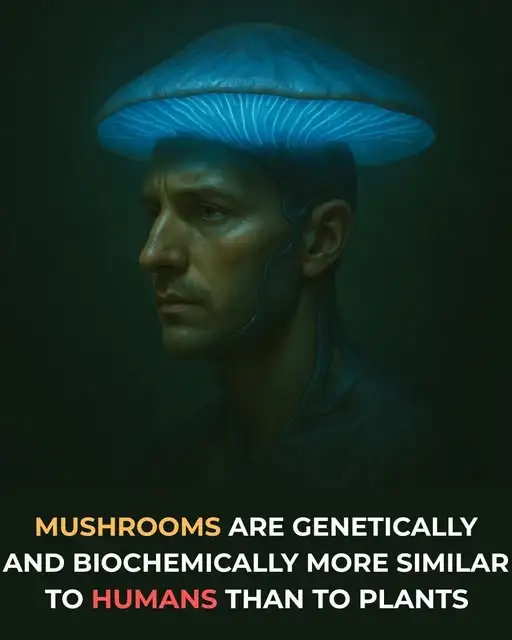
It sounds like something out of a science fiction novel, but it’s true: mushrooms share more DNA with humans than they do with plants. You may have always thought of fungi as being closer to plants, but in reality, mushrooms and humans are more alike than you might expect. This fascinating genetic connection is not just an intriguing fact—it’s shaping groundbreaking research that could transform medicine and technology. Let’s dive into the science behind this remarkable discovery.
Fungi and Humans: A Surprising Genetic Relationship
When we think about mushrooms, most of us picture them growing in the dirt, just like the plants around them. It seems logical to assume that fungi are closely related to plants. But science tells a different story. In fact, fungi are genetically closer to animals—like us—than they are to the trees and plants they grow beside.
About 1.1 billion years ago, the fungal and animal kingdoms split from a common ancestor. Plants, on the other hand, branched off much earlier, forming their own separate lineage. This ancient connection is what links fungi and animals, making mushrooms more similar to humans than we ever thought possible.
What Makes Mushrooms Like Us?
At a molecular level, fungi share many characteristics with animals, including humans. For example, both mushrooms and humans store energy as glycogen rather than starch, which is how plants store their energy. Fungi also breathe in oxygen and release carbon dioxide, just like us. Even more surprising, mushrooms build strength with chitin, a compound also found in the exoskeletons of insects. These shared traits are not just coincidences; they reveal a deeper biological connection between us and fungi.
What This Connection Means for Science
So, why does this matter? The genetic similarities between fungi and humans are more than just trivia—they’re guiding new scientific research. Understanding the molecular makeup of mushrooms can help scientists develop treatments for diseases, create sustainable materials, and even advance artificial intelligence systems.
Psilocybin: A Mushroom Compound with Healing Potential
One of the most exciting areas of research involving mushrooms is psilocybin, a compound found in certain fungi. For centuries, psilocybin-containing mushrooms have been used in traditional healing practices, but recent studies are uncovering their potential to treat modern ailments. Research is showing promising results in using psilocybin to treat conditions like depression, PTSD, and addiction.
Psilocybin works by affecting serotonin receptors in the brain, potentially helping to reset the brain’s emotional pathways. Early clinical trials have shown positive effects, with participants reporting reduced symptoms of depression and anxiety after undergoing therapy with psilocybin. This breakthrough could open up new avenues for treating mental health disorders with natural, plant-based therapies.
Mycelium: The Root of Innovation
Beyond medicinal applications, fungi are inspiring innovations in technology and sustainability. The root-like network of fungi, known as mycelium, has been a source of inspiration for researchers seeking to develop new materials. Mycelium is being studied as a potential replacement for plastics, thanks to its biodegradable nature and versatility. It could even help clean polluted soil, making it a valuable tool for environmental restoration.
Mycelium’s incredible properties don’t stop there. Scientists are experimenting with it as a building material, using it to create eco-friendly, sustainable housing. Its ability to grow in almost any shape makes it a natural alternative to synthetic building materials, and it’s fully biodegradable, reducing the environmental impact of construction. Mycelium is truly a marvel of nature with endless possibilities for the future.
Fungi and AI: A Lesson in Smarter Systems
The structure of mycelium is also inspiring the development of smarter artificial intelligence systems. Mycelium’s self-organizing network is efficient, adaptable, and capable of responding to environmental changes in real-time. Scientists are studying mycelium’s behavior to design AI systems that can think and act more like living organisms, enhancing their efficiency and problem-solving capabilities.
By understanding how fungi organize and process information, researchers hope to create AI systems that can learn and adapt more effectively, pushing the boundaries of technology.
Fungi as a Mirror of Our Own Biology
It’s amazing to think that mushrooms—seemingly so different from us—are actually more closely related to humans than we ever imagined. From medical treatments to sustainable technologies, fungi are showing us just how interconnected life on Earth is. Every mushroom that pushes through the soil carries a genetic memory of that shared ancestry, reminding us that our story, and the story of life itself, is written in connections deeper than we can see.
The Future of Fungi Research
As research into fungi continues, we can expect even more revolutionary discoveries. The shared DNA between humans and fungi offers immense potential for advancing medicine, technology, and sustainability. From treating mental health issues with psilocybin to building homes with mycelium, fungi could hold the key to solving some of the world’s most pressing problems.
Conclusion: Fungi as a Gateway to the Future
Fungi are more than just a food source or a curiosity in nature—they’re a window into the past and a pathway to the future. As science uncovers more about the genetic link between fungi and humans, we’re discovering that these humble organisms have much to teach us. Whether it’s in medicine, sustainability, or technology, fungi have the potential to change the world as we know it. The more we study them, the more we realize how interconnected we truly are with the world around us.
Meta Description: Mushrooms share more DNA with humans than with plants. Discover how fungi’s genetic connection to humans is shaping new medical, technological, and sustainable innovations.
