
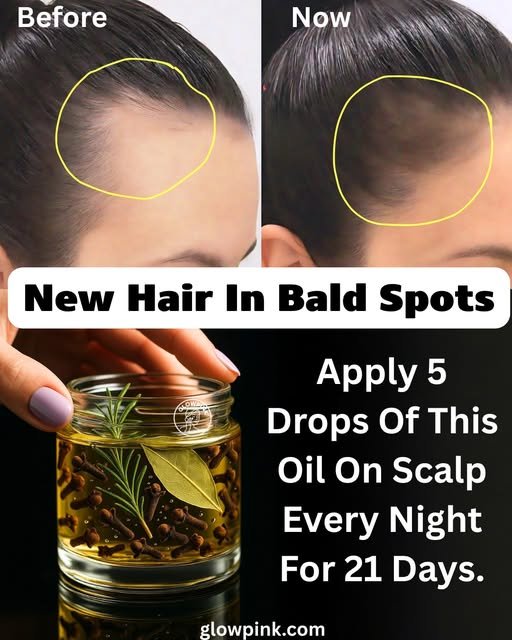
🌿 Clove–Rosemary–Bay Leaf Hair Oil: The DIY Growth Serum Filling Bald Spots (Fast)
Why this DIY is going viral
Bald spots don’t appear overnight. They usually start with miniaturized follicles, low-grade inflammation, sluggish blood flow, and a disrupted scalp microbiome. The good news? You can target all four with a kitchen-easy infusion that blends powerful botanicals (clove, rosemary, bay leaf) into a lipid-rich base (castor + coconut) — then fortify it with fenugreek, curry leaves, and vitamin E. The result is a multi-benefit serum that supports healthier follicles, thicker shafts, and visibly fuller patches over time.
This recipe pairs traditional wisdom with modern insights: rosemary has been compared with 2% minoxidil over six months in people with androgenetic alopecia; clove (eugenol) is a vasodilating antioxidant that helps circulation; bay leaf offers soothing polyphenols. Add castor oil (ricinoleic acid), coconut oil (penetration enhancer), fenugreek (proteins + nicotinic acid), curry leaves (β-carotene), and vitamin E (antioxidant shield), and you’ve got a serious at-home protocol.
⚠️ Note: Results vary. Consistency matters. Always patch-test and speak with a professional if you have scalp conditions.
Ingredients (≈130 ml finished oil)
- 2 tbsp whole cloves – eugenol for circulation and antioxidant defense
- 3 fresh rosemary sprigs (or 2 tbsp dried) – rosmarinic acid & cineole support follicle health
- 4 dried bay leaves – soothing tannins and polyphenols
- 100 ml cold-pressed coconut oil – medium-chain triglycerides enhance penetration to the cortex
- 30 ml cold-pressed castor oil – ricinoleic acid may help modulate DHT pathways on the scalp
- 1 tbsp fenugreek seeds – proteins, lecithin & nicotinic acid for shaft strength
- 5–6 fresh curry leaves – β-carotene to fortify roots and reduce breakage
- 2 vitamin E capsules (≈400 IU total) – antioxidant protection for scalp lipids
Step-by-step (Infusion Method)
1) Prep botanicals
Lightly bruise the cloves, crush bay leaves, rinse and pat dry curry leaves. This opens up the aromatic glands for better extraction.
2) Create a gentle double-boiler
In a heat-safe glass bowl set over barely simmering water, add coconut oil and castor oil. Keep temp below 95 °C to preserve heat-sensitive actives.
3) Slow infusion (≈40 minutes)
Stir in clove, rosemary, bay, fenugreek, curry. Maintain a low, steady heat. The oil will darken and release a warm herb-spice aroma — a sign you’re extracting terpenes and phenolics.
4) Cool & enrich
Remove from heat. When warm (not hot), pierce vitamin E capsules and mix in thoroughly.
5) Strain & bottle
Let it cool fully. Strain through muslin/coffee filter. Decant into an amber dropper bottle to protect from light and oxidation.
Shelf life: Up to 3 months stored cool and dark. Vitamin E helps slow rancidity.
How to use (for real-world results)
- Patch test first: Apply a little behind the ear; wait 24 hours.
- Frequency: 3–4×/week on a dry scalp; nightly during active shedding is okay.
- Dose: Warm ~2 tsp between palms. Part hair and tap onto bald or thinning zones.
- Massage: Use gentle circular pressure for 4 minutes. This mirrors protocols associated with increased hair-shaft thickness after months of practice.
- Leave-in time: Minimum 2 hours; overnight is ideal. Use an old pillowcase.
- Wash out: Mild sulfate-free shampoo; finish with cool water to seal cuticles.
- Timeline: Many users report reduced shedding by week 3, and baby hairs in months 3–4 when combined with solid sleep, stress management, and a protein-rich diet.
Why these ingredients work together
Clove (Eugenol):
A potent antioxidant and mild vasodilator that supports circulation around follicles — crucial where micro-inflammation strangles nutrient delivery.
Rosemary:
Rich in rosmarinic acid and cineole, rosemary is a hero for scalp comfort and microcirculation. Its use has been explored in comparison to 2% minoxidil timelines for people with pattern hair loss, making it a top botanical for DIY regimens.
Bay Leaf:
Tannins and polyphenols help calm irritation and rebalance scalp flora, useful where dandruff or itch coexists with thinning.
Castor Oil:
Dense, occlusive, and rich in ricinoleic acid, castor helps reduce TEWL (trans-epidermal water loss), conditions the scalp, and is often used anecdotally to support edges and brows.
Coconut Oil:
One of the few oils shown to penetrate the hair shaft, reducing protein loss from grooming and surfactants. It also acts as a delivery vehicle for lipid-soluble actives.
Fenugreek:
A source of lecithin, proteins, and nicotinic acid, fenugreek supports shaft integrity and can help reduce breakage that makes hair look thinner.
Curry Leaves:
Loaded with β-carotene and antioxidants, these leaves are traditional favorites for root strength and shine.
Vitamin E:
An antioxidant shield that protects scalp lipids from peroxidation, especially useful during the anagen (growth) phase.
Visible benefits you can expect
- Re-energized follicles: Better microcirculation + antioxidant support can help “wake up” sluggish roots.
- Less inflammation, less itch: Clove, bay, and rosemary help calm the scalp environment that fuels miniaturization.
- Reduced shedding: A healthier scalp environment + consistent massage = fewer strands in the shower.
- Thicker-looking hair: Fenugreek proteins and coconut’s penetrative action help limit breakage and improve shaft feel, making hair look fuller.
- Microbiome balance: Clove’s antifungal action plus bay’s antibacterial properties help with dandruff-prone scalps.
Pro tips for faster progress
- Heat cap boost: After applying, wear a warm (not hot) cap for 15 minutes to enhance penetration.
- Pre-poo shield: On wash days, apply a thin layer to lengths 30 minutes before shampoo to minimize moisture/protein loss.
- Scalp hygiene: Keep nails trimmed; avoid aggressive scratching that inflames follicles.
- Lifestyle stack: Prioritize sleep, protein (keratin building blocks), iron, zinc, and B-complex — internal gaps slow topical progress.
- Consistency tracker: Take weekly photos under the same light/angle; small gains are easier to spot over 8–16 weeks.
Safety & who should be cautious
- Essential-oil sensitivity: Though this is an infusion (not straight EO), clove and rosemary are aromatic. If you’re sensitive, start with shorter contact times or reduce clove by half.
- Medical conditions: If you have eczema, psoriasis, seborrheic dermatitis, or are pregnant/breastfeeding, consult a professional before use.
- Medication conflicts: If you’re on topical minoxidil or prescription treatments, you can usually alternate (e.g., minoxidil AM, DIY oil PM), but ask your clinician first.
- Allergies: Nut/seed sensitivities? Swap coconut for sunflower and castor for argan; performance will differ slightly but still be beneficial.
FAQs
How long until I see results?
Most users report less shedding by week 3 and new baby hairs by months 3–4. Thicker, denser coverage often requires one full growth cycle (4–6 months).
Can I leave it in without washing?
For most, overnight then wash is best. If your scalp tolerates it and you’re not greasy, a tiny amount can be used as a leave-in on edges.
Can I use this with derma-rolling?
Yes, but not the same night. Microneedle on clean scalp, apply a sterile hydrating serum, and use this oil 24–48 hours later to avoid irritation.
What if I’m sensitive to clove?
Cut clove by 50% and increase rosemary slightly. Always patch-test.
