
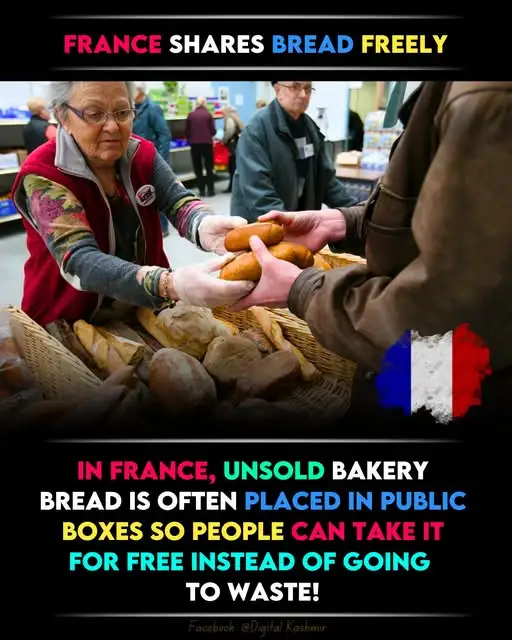
The French Bakeries Turning Leftover Bread into Hope, Not Waste
In France, something beautiful is happening — quietly, daily, and with heart. Across small towns and big cities, local bakeries are taking a stand against food waste in the simplest way imaginable: they’re giving away unsold bread instead of throwing it away.
It’s not a flashy campaign or a government mandate. It’s a movement born from compassion, community, and common sense — one baguette at a time.
A Simple Idea That’s Feeding Thousands
At the end of each day, bakeries across France are left with perfectly good bread that didn’t sell — warm loaves, golden baguettes, and croissants that would otherwise end up in the trash. But instead of wasting them, many bakers place their leftovers into public bread boxes or community baskets outside their shops.
Anyone can take a loaf freely — no questions asked, no judgment passed. It’s a simple exchange: one person’s surplus becomes another person’s meal. For families struggling financially, for students far from home, or for those simply having a rough week, this initiative brings both nourishment and dignity.
The Numbers Behind the Movement
According to the French Agency for Ecological Transition (ADEME), bread accounts for nearly 10% of all food waste in France. That’s an astonishing number when you think about how central bread is to French culture — it’s served with nearly every meal.
By redistributing leftover loaves, these bakeries aren’t just preventing waste — they’re addressing hunger, supporting sustainability, and setting an example for the rest of the world.
How It Works: Sharing Made Simple
The system is refreshingly straightforward. Unsold bread is placed in specially marked boxes or baskets, usually labeled with a sign such as “Free Bread — Take What You Need.” Some towns have even created communal bread lockers where multiple bakeries contribute their leftovers daily.
Local councils and community groups often support these efforts by maintaining the boxes, ensuring cleanliness, and spreading awareness. The result is a collaborative ecosystem of kindness — bakers, citizens, and local leaders all working hand-in-hand.
More Than Bread: A Lesson in Humanity
Beyond its environmental benefits, this initiative carries a deeper message: no food should be wasted when people are hungry. It’s a gentle reminder that sustainability is not just about recycling or renewable energy — it’s about empathy, shared responsibility, and care for one another.
As one Parisian baker put it: “Bread is sacred. It’s meant to be eaten, not thrown away.” His words reflect an age-old truth — food connects us, and sharing it keeps communities alive.
The Environmental Impact of Food Waste
Food waste isn’t just a moral issue — it’s an environmental one. When bread and other foods are discarded, the energy, water, and resources used to produce them are wasted too. In landfills, food decomposes and releases methane, a potent greenhouse gas that accelerates climate change.
By redistributing leftover bread, France’s bakeries are making a real difference. Every loaf shared instead of trashed means fewer greenhouse emissions, less landfill burden, and more full stomachs.
Community Support and Local Initiatives
Many of these efforts have grown with the help of local organizations and social enterprises. For instance, in cities like Lyon and Marseille, community groups coordinate pick-ups of unsold bread and distribute them to shelters or food banks the same evening.
Even local councils have started to recognize the power of this model, encouraging bakeries to participate and sometimes offering logistical support like collection bins or awareness posters.
It’s a new kind of collaboration — one that blends tradition, compassion, and sustainability into everyday life.
Inspiring a Global Ripple Effect
France’s example has begun to inspire similar actions across Europe. In Belgium, Italy, and Spain, bakeries and supermarkets are experimenting with free food-sharing stations for unsold items. The idea is spreading fast — because kindness, it turns out, is contagious.
And why shouldn’t it be? These simple acts show that real change doesn’t always need huge investments or complex technology. Sometimes, it starts with a loaf of bread, a box, and a community that cares.
How You Can Help
You don’t need to live in France to make a difference. Whether you’re a bakery owner, a café worker, or just a concerned citizen, there are ways to help reduce food waste in your own community:
- Support local food-sharing projects — volunteer or spread awareness.
- Encourage local businesses to donate unsold goods instead of discarding them.
- Buy mindfully — take only what you need, and use leftovers creatively at home.
- Start a community food box in your area — a small shelf or basket can change lives.
A Slice of Hope in Every Loaf
There’s something deeply symbolic about bread. It’s simple, humble, and universal — found on every table, across every culture. So when a bakery decides to share it freely, it becomes more than food — it becomes a message.
A message that says: We see you. You matter. You deserve to eat.
In a world where millions still go hungry while tons of food go to waste, France’s bakeries are quietly showing us that humanity and sustainability can rise together — fresh and warm, like a morning baguette.
Maybe it’s time the rest of us followed their lead.
🥖💚 #France #FoodWaste #Sustainability #CommunityCare #ZeroHunger
