
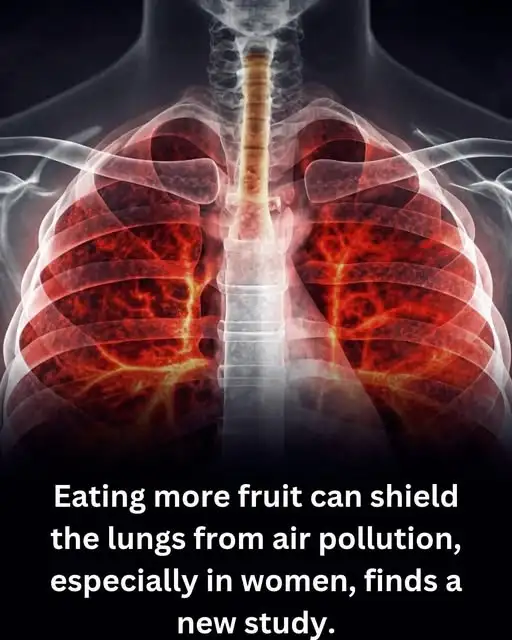
How Eating More Fruit Can Protect Your Lungs from Air Pollution, According to New Research
We all know that air pollution harms our lungs — but what if a few extra servings of fruit could actually help defend them? 🍎🍊
A groundbreaking new study presented at the European Respiratory Society Congress has found that people who eat at least four servings of fruit per day may have better lung protection against polluted air, especially fine particulate matter known as PM2.5.
It’s a fascinating reminder that the food on your plate can do more than nourish your body — it can literally help your lungs breathe easier in a polluted world.
The Study That’s Changing How We Think About Food and Air Pollution
Researchers analyzed data from nearly 200,000 participants in the UK Biobank, one of the world’s largest health databases. They compared people’s fruit intake with their lung function and levels of air pollution exposure.
To measure lung capacity, scientists used a key indicator called FEV1 (Forced Expiratory Volume in 1 second) — basically, how much air you can forcefully exhale in one second. Lower FEV1 values mean weaker lungs or impaired function.
Here’s what they found: for every five microgram-per-cubic-meter increase in PM2.5 — a common measure of air pollution — people who ate up to two servings of fruit per day had an average 78.1 mL drop in FEV1. But those who ate four or more servings saw only a 57.5 mL reduction.
In simple terms: pollution hurts everyone’s lungs, but fruit eaters experienced less damage.
Why Fruit Helps: The Power of Antioxidants and Anti-Inflammatory Compounds
So how exactly can fruit defend your lungs from dirty air?
The answer lies in the incredible mix of antioxidants and phytochemicals found in fruit. Air pollution floods the body with free radicals — unstable molecules that cause oxidative stress and inflammation, especially in the lungs.
Antioxidants like vitamin C, flavonoids, polyphenols, and carotenoids help neutralize those free radicals, protecting lung cells from damage. Meanwhile, anti-inflammatory compounds reduce swelling and irritation in the airways, keeping breathing smooth and easy.
Fruits such as oranges, apples, berries, kiwi, and grapes are particularly rich in these protective nutrients. When eaten regularly, they build up your body’s resilience against environmental stressors like smog, smoke, and dust.
What Is PM2.5 — and Why Is It So Dangerous?
PM2.5 stands for “particulate matter” that’s smaller than 2.5 micrometers — about 30 times thinner than a strand of hair. Because these particles are so tiny, they can travel deep into the lungs and even enter the bloodstream.
Prolonged exposure to PM2.5 has been linked to chronic respiratory diseases, asthma, cardiovascular problems, and premature death. It’s one of the most serious forms of pollution affecting urban populations today.
While air purifiers, masks, and cleaner environments help reduce exposure, diet appears to offer a new and powerful layer of defense. As lead researcher Pimpika Kaewsri and her team noted, “Fruit intake didn’t change how much pollution people were exposed to — but it changed how their lungs responded.”
Women Showed Stronger Protection — Here’s Why
Interestingly, the study also found that women tended to eat more fruit than men — and they also experienced less pollution-related lung decline.
This may be due to dietary patterns and biological factors that influence how antioxidants are absorbed and used in the body. Estrogen, for example, interacts with antioxidant systems, potentially amplifying the protective effect of fruit in women’s lungs.
Regardless of gender, though, the takeaway is clear: eating more fruit benefits everyone, but the impact may be especially visible in those already getting plenty of plant-based nutrients.
Food as Your First Line of Defense
We often think of pollution protection in terms of air filters and masks — but food plays a quiet, consistent role in resilience. Every bite of fruit delivers compounds that help your cells repair, detoxify, and stay balanced.
Think of your lungs like a sponge — they absorb the air you breathe, for better or worse. The antioxidants in fruit act like gentle rinses, washing away the oxidative damage that builds up day after day.
And unlike medication, this protection comes without side effects. Just vibrant colors, natural sweetness, and long-term health benefits.
Easy Ways to Add More Fruit to Your Day
If four servings a day sounds like a lot, it’s actually simpler than you think. Here’s how you can reach that goal naturally:
- Morning boost: Add berries or sliced banana to your oatmeal, cereal, or yogurt.
- Snack smart: Keep apples, oranges, or grapes handy for mid-afternoon energy.
- Blend it up: Make a smoothie with mixed fruits, spinach, and almond milk for a quick antioxidant hit.
- After dinner: Swap dessert for a fruit salad with kiwi, pineapple, and mango.
Each serving adds up — and every extra helping makes your lungs just a little stronger.
It’s Not a Cure — But It’s a Start
Let’s be clear: eating more fruit won’t make air pollution harmless. We still need cleaner cities, greener policies, and better global awareness of air quality issues.
But what this study shows is that personal choices matter too. You can’t control every breath you take, but you can control what fuels your body. The right nutrients can strengthen your internal defense system, helping you thrive even in less-than-perfect environments.
Conclusion: Small Daily Choices, Big Long-Term Benefits
The takeaway is simple — fruit is more than food. It’s protection. It’s resilience. It’s nature’s way of giving your body what it needs to stand strong against modern-day stressors like pollution.
So next time you reach for a snack, think beyond hunger. Think of your lungs, your health, and your future. Because sometimes, a handful of grapes or a fresh orange is doing more for you than you realize.
Breathe better. Eat brighter. Your lungs will thank you.
📄 Reference: Pimpika Kaewsri et al., “Fruit Intake Attenuates Adverse Effects of Fine Particulate Matter on Lung Function: Results from the UK Biobank,” European Respiratory Society Congress (2025).
#FruitBenefits #LungHealth #AirPollution #Antioxidants #HealthyLiving #NutraFacts
