
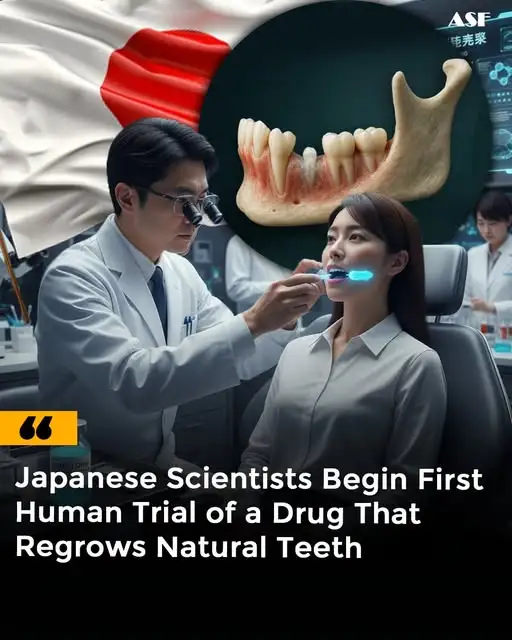
Scientists in Japan May Have Found a Way to Regrow Human Teeth , Trials Begin at Kyoto University
Imagine a world where you could regrow your lost teeth — no implants, no dentures, just your natural smile coming back. It sounds like science fiction, right? Well, that future might be closer than we think. 🦷
At Kyoto University Hospital, scientists led by Dr. Katsu Takahashi are testing a revolutionary antibody that could change dental medicine forever. The treatment works by blocking a protein called USAG-1, which normally prevents new teeth from forming. When the protein is blocked, the body’s natural tooth regeneration process is reactivated.
In animal studies, this breakthrough therapy led to the growth of new, fully functional teeth within weeks. And now, for the first time, human clinical trials have begun in Japan.
The Science Behind Tooth Regrowth
For decades, scientists believed that humans could only grow two sets of teeth — baby teeth and adult teeth. After that, any loss was permanent. But this new research challenges that long-held belief.
Dr. Takahashi’s team discovered that the USAG-1 protein acts like a biological “brake” that stops new tooth buds from developing. By creating an antibody that neutralizes USAG-1, they effectively release that brake — allowing the body to start forming new teeth naturally.
In tests on mice and ferrets, animals that had lost teeth grew brand-new replacements within just a few weeks. These teeth weren’t just cosmetic; they had normal roots, enamel, and function — just like the original ones.
Human Trials: A Major Leap Forward
After years of promising animal results, the research has entered its most exciting stage: human testing. The first trials began in 2025 at Kyoto University Hospital, where volunteers are being carefully monitored for safety and early signs of success.
Dr. Takahashi’s goal is to confirm that the antibody is safe for humans and that it triggers similar regenerative effects as seen in animals. If these early trials go well, larger studies will follow before the treatment can be made available worldwide.
“Our ultimate aim is to provide a treatment for people who have lost teeth naturally or due to injury,” said Dr. Takahashi. “We want to give them the chance to smile again — with their own teeth.”
Why This Discovery Could Transform Dentistry
Tooth loss is incredibly common, affecting billions of people worldwide. Current treatments like dentures, bridges, or implants help, but they come with limitations. Implants can fail, dentures can be uncomfortable, and none of them truly restore natural tooth tissue.
This new therapy offers something revolutionary — the ability to grow real teeth again. It could benefit:
- Children born with congenital tooth absence (such as anodontia or hypodontia).
- Adults who lose teeth from decay, trauma, or aging.
- Patients struggling with gum or bone issues that make implants difficult.
If proven safe and effective, this treatment could eliminate the need for artificial replacements entirely — restoring both function and confidence naturally.
How Soon Could This Be Available?
While the news is incredibly exciting, experts caution that it will take time before this treatment is available to the public. The current phase focuses on safety testing in a small group of volunteers. After that, additional phases will test how well the antibody works on a larger scale.
According to Kyoto University researchers, if all goes well, clinical use could begin by the early 2030s. That may seem far away, but in the world of medicine, it’s lightning fast — especially for something as complex as regrowing teeth.
Other Innovations in Tooth Regeneration
Japan isn’t the only country exploring dental regeneration. Around the world, scientists are studying stem cell therapy and tissue engineering to restore damaged enamel and roots. However, the USAG-1 antibody method stands out because it triggers the body’s natural ability to grow an entirely new tooth — something no stem cell treatment has achieved yet.
The Hope for Millions
Tooth loss affects more than just appearance. It can impact speech, nutrition, and self-esteem. That’s why this discovery is more than a scientific milestone — it’s a message of hope for millions who’ve been told “you’ll never get that tooth back.”
Dr. Takahashi’s research represents a shift toward regenerative medicine — helping the body heal itself rather than relying solely on artificial fixes. If successful, it could mark the beginning of a new era where dental care becomes more about restoration than replacement.
Final Thoughts: A Future Worth Smiling About
For now, the trials continue, and the world watches closely. The idea of naturally regrowing teeth — once a dream — is now being tested in humans for the first time. While we may still be years away from a dentist appointment that includes “tooth regrowth injections,” this discovery reminds us of how far science has come.
The next time you visit the dentist, remember: the solution to tooth loss might not be in a titanium implant — but already inside you, waiting to be unlocked.
Stay tuned. The science of smiles is evolving — and the future looks bright.
#DentalResearch #JapanScience #ToothRegrowth #KyotoUniversity #RegenerativeMedicine #HealthInnovation #ScienceNews
