
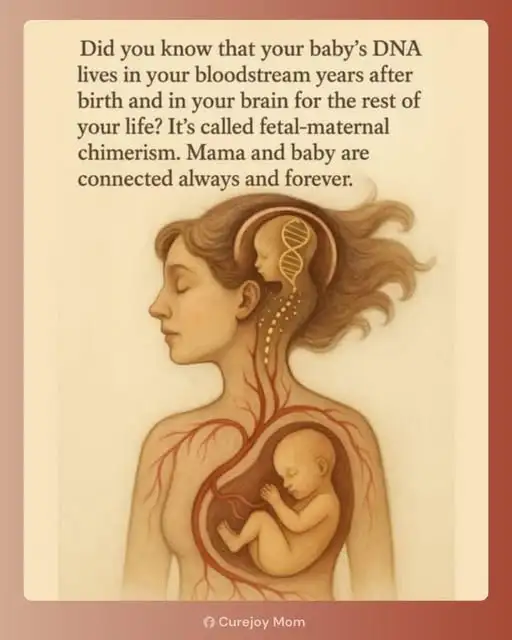
Motherhood Written in Our Cells: The Deep, Invisible Bond Between Mother and Child
Motherhood is often described as a deep emotional connection. But what if we told you that this connection runs even deeper—into the very cells of a mother’s body? Studies have shown that a baby’s DNA can remain in a mother’s bloodstream and even her brain for years after birth. This phenomenon, known as fetal-maternal microchimerism, is a scientific reminder that our children never truly leave us.
This invisible bond between mother and child, one that science is only beginning to understand, is more than just a poetic idea. It’s biologically real. A mother carries traces of her child long after birth, and these traces shape the way she feels, thinks, and even heals. Let’s explore how this extraordinary phenomenon works and what it means for mothers everywhere.
What is Fetal-Maternal Microchimerism?
Fetal-maternal microchimerism refers to the presence of cells from the baby in the mother’s body long after childbirth. During pregnancy, some of the baby’s cells can enter the mother’s bloodstream and take residence in various parts of her body, including the heart, liver, and even the brain. These cells can stay there for years, sometimes even for life.
Imagine the profound impact of this connection. It’s not just a fleeting moment during pregnancy but a lasting physical bond between mother and child that transcends time. These baby cells, called microchimeric cells, are a physical reminder that the relationship between a mother and her child continues far beyond the nine months of gestation.
Why Does It Matter? The Emotional and Physical Impact
While the idea of cells from our children lingering inside us may seem abstract, it’s more significant than we might think. These baby cells, still circulating in the mother’s body, could play a role in everything from a mother’s emotional health to her ability to recover after childbirth.
The Emotional Bond
Think about the deep emotional connection mothers often feel toward their children—a bond that often feels unbreakable, even when the children grow older. Studies suggest that fetal-maternal microchimerism may be one reason why this bond is so strong. The presence of baby’s DNA in a mother’s body could enhance her empathy, emotional regulation, and sensitivity to her child’s needs. The physical link between mother and child is not just biological but emotional, making a mother more attuned to her child’s well-being.
Influencing Health and Healing
These microchimeric cells are also believed to have potential benefits for the mother’s health. Research has shown that having a baby’s cells in her body could contribute to better healing after childbirth. For example, some studies suggest that fetal cells might help repair tissue in the mother’s body, aiding in recovery from the physical stresses of pregnancy and delivery.
In addition, these cells have been linked to a mother’s immune system. The cells might help bolster her immune response, providing a layer of protection that can aid in fighting off illness or inflammation. While more research is needed, these findings suggest that the deep, invisible connection between mother and child could extend beyond the emotional realm and impact a mother’s physical health as well.
The Science of Love: How Love and Biology Are Intertwined
In a way, the science behind fetal-maternal microchimerism makes the love between a mother and child even more extraordinary. It’s one thing to love someone with all your heart, but it’s another when that love is embedded in your very cells. This biological phenomenon makes the connection between mother and child something far deeper than just emotional attachment—it’s a bond that shapes a mother’s entire being.
The idea that a mother’s love for her child could be literally part of her—carried in her cells, her blood, her organs—adds a whole new dimension to the concept of maternal love. It’s a love that doesn’t just live in the heart but in every fiber of a mother’s being. This phenomenon is a profound testament to the invisible yet very real bond that exists between a mother and her child.
What This Means for Mothers and Children
For mothers, the knowledge that their connection to their children is biologically written into their bodies can be comforting. It offers an even greater sense of connection and the idea that, even as children grow up and move out into the world, part of them remains with their mothers forever.
For children, knowing that their presence leaves an imprint on their mothers in such a deep and lasting way can be empowering. It’s a reminder that the relationship between mother and child is not just based on the moments spent together but also on something far more enduring.
The Eternal Bond
The idea that our children never truly leave us takes on a literal meaning with fetal-maternal microchimerism. Even as time passes and our children grow, part of them remains inside us, continuing to shape our emotional and physical world. The bond between mother and child, in this sense, is eternal—a reminder that love transcends time and space, and is embedded deeply within us.
Conclusion: A Love Written in Our Cells
Motherhood is often described in emotional terms—feelings of love, nurturing, and care. But the reality is even more profound. Thanks to fetal-maternal microchimerism, the love between a mother and her child is written into her very cells, creating a bond that lasts far beyond childbirth. This connection is not just poetic; it’s biologically real, a deep, invisible thread that links mother and child forever.
So next time you see a mother with her child, remember that their bond is not just emotional—it’s biological. It’s a connection that science is still uncovering, but one that has existed for as long as humanity itself.
