
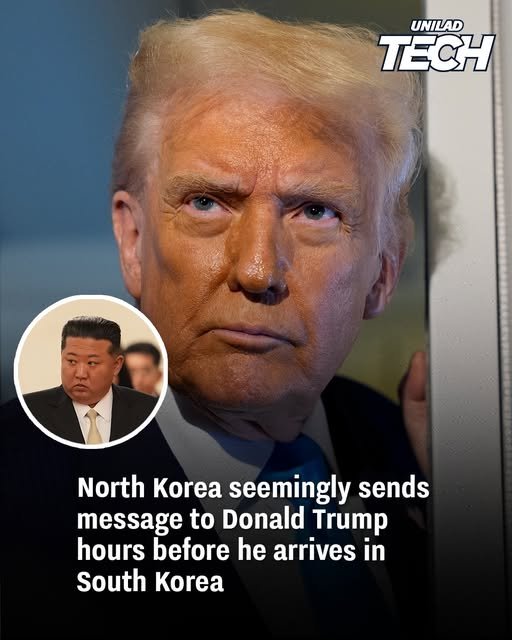
What happened
Just hours before President Donald Trump’s arrival in South Korea for APEC events, North Korea test-fired sea-to-surface strategic cruise missiles from its western coast. South Korea’s Joint Chiefs of Staff said they detected preparations and the subsequent launch Tuesday afternoon local time and are analyzing the system’s specifics. Reuters
State media later said the missiles were fired vertically from a vessel and flew for over 7,800 seconds (a little more than two hours) along a preset route before striking targets in the West Sea (Yellow Sea). KCNA also emphasized the test’s role in expanding the regime’s “strategic offensive means.” chinadailyasia.com+1
Senior military official Pak Jong Chon reportedly oversaw the test and framed it as part of a plan to continuously “toughen the nuclear combat posture.” Kim Jong Un did not attend the launch, according to the KCNA reports. Al Jazeera+1
Why the timing matters
The test coincided with Trump’s trip to South Korea, where he’s receiving high-profile honors and discussing trade and security, including a planned meeting with China’s Xi Jinping on Thursday. The optics are familiar: Pyongyang often pairs weapons activities with high-visibility diplomatic moments to signal leverage. The Guardian+1
Trump downplayed the launches en route, telling reporters he expects engagement “at some point,” echoing past comments about potential talks with North Korea. Meanwhile, Seoul and Washington stressed combined readiness and said analysis of the launch is ongoing. The Washington Post+1
What we know about the missiles
While Pyongyang did not name the system, state and regional outlets described them as sea-to-surface strategic cruise missiles launched vertically from a ship—language consistent with North Korea’s recent push to diversify launch platforms and complicate interception. The flight time (~7,800 seconds) suggests a long-range, subsonic cruise profile, not a ballistic trajectory. South Korean and U.S. analysts are still reviewing telemetry, route, and recovery. chinadailyasia.com+2Army Recognition+2
Key technical takeaways (based on official and open-source reports so far):
- Launch mode: vertical, ship-based (sea-to-surface) per KCNA summaries. chinadailyasia.com
- Duration: ~2 hours 10 minutes (7,800+ seconds), implying long-range subsonic endurance. xinhuanet.com+1
- Command narrative: framed as strengthening nuclear deterrent; Kim absent; Pak Jong Chon on site. Al Jazeera
The diplomatic backdrop in South Korea
Trump’s Korea stop has been heavy on pageantry as Seoul courts progress on trade and security. He was presented with a replica Silla-era gold crown and the Grand Order of Mugunghwa, South Korea’s highest order—symbolic gestures spotlighted by Seoul-based coverage. Parallel to the optics are claims of movement on a large investment-for-tariffs arrangement, with attention turning to Trump’s Thursday meeting with Xi Jinping in South Korea. The Guardian+2The Washington Post+2
Al Jazeera notes that South Korea has dialed up flattery as both sides talk up progress, though details of any final deal remain fluid; other outlets describe the pageantry and trade signals, plus Trump’s public soft-pedaling of the North’s latest test. Al Jazeera+1
What it signals from Pyongyang
Cruise missiles give North Korea a different problem set for U.S.–ROK defenses:
- They can fly low, hugging terrain and shortening detection windows compared to ballistic missiles.
- Ship-based launches widen operating areas and create uncertainty for allied planners.
- Messaging around “strategic” cruise missiles keeps nuclear ambiguity front and center.
KCNA’s line that the test was to “impress [their] abilities upon the enemies” fits Pyongyang’s signaling playbook—especially when regional leaders are gathered nearby. Al Jazeera
How Seoul and Washington are responding
South Korea’s Joint Chiefs affirmed detection and ongoing analysis; the U.S. echoed combined defense readiness and maintained that allied posture can deliver a “dominant response” to provocations. That’s standard language intended to reassure the public and allies without escalating rhetoric ahead of Trump’s bilateral agenda. Reuters
Meanwhile, diplomatic focus will quickly shift to Trump–Xi—with markets and policymakers watching any signs of tariff de-escalation or export-control tweaks. Even if North Korea isn’t on the formal agenda, it’s the inevitable elephant in the room for any U.S.–China conversation in Korea. Reuters+1
Bottom line
- Yes, North Korea fired long-flying, sea-launched cruise missiles right as Trump arrived—a classic signal-sending move. chinadailyasia.com+1
- No, it doesn’t change the immediate strategic balance, but it complicates defenses and underscores Pyongyang’s push to mature cruise-missile options alongside ballistic systems. Army Recognition
- Expect more signaling as Trump’s meetings proceed; for Pyongyang, atmospherics are part of deterrence. Modern Diplomacy
Quick FAQ
Did Kim Jong Un attend the launch?
No. KCNA coverage lists Pak Jong Chon as the senior official on site; Kim did not attend. Al Jazeera
How long were the missiles in the air?
Over 7,800 seconds (roughly 2 hours 10 minutes), per KCNA-based reports. xinhuanet.com+1
Is this related to Trump’s visit?
The timing strongly suggests strategic messaging; Seoul and Washington publicly downplayed escalation while noting readiness. Reuters+1
What’s Trump doing in South Korea?
Receiving honors, discussing trade/investment, and preparing to meet China’s Xi Jinping on Thursday in South Korea. The Guardian+1
