
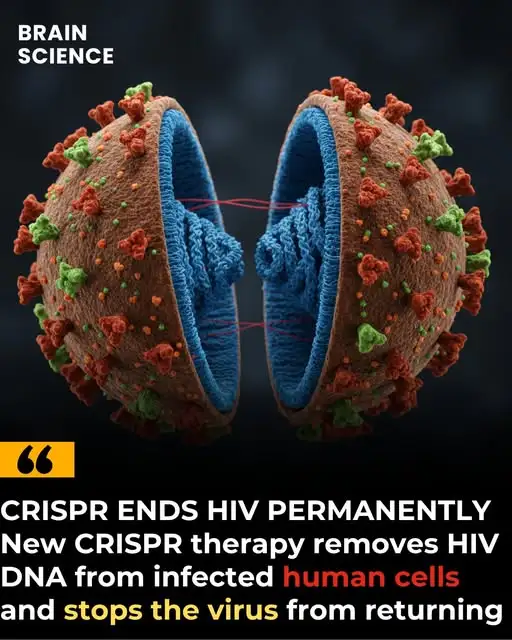
Revolutionary CRISPR Therapy Offers Hope for a Permanent HIV Cure
For millions of people living with HIV, managing the virus has meant a lifetime of treatment, daily medication, and constant fear of the virus resurfacing. But what if there was a way to truly cure HIV? That’s exactly what scientists are now claiming to have achieved with a groundbreaking CRISPR-based therapy that removes HIV from infected human cells. In this article, we dive deep into this revolutionary discovery and explore what it could mean for the future of HIV treatment.
What is CRISPR and How Does it Work?
CRISPR, short for “Clustered Regularly Interspaced Short Palindromic Repeats,” is a revolutionary gene-editing technology that has made waves in the world of science. By acting like a molecular “scissors,” CRISPR allows scientists to cut out specific pieces of DNA, edit them, and even replace them with new genetic material. This ability to directly manipulate DNA opens up incredible possibilities for treating genetic diseases, including HIV.
Until now, the primary treatment for HIV has been antiretroviral therapy (ART), which helps manage the virus by suppressing its activity in the body. However, ART doesn’t cure the disease; it only controls it, meaning patients must continue their medication indefinitely. The real breakthrough with CRISPR is that it can target the root cause of HIV—the viral genetic material embedded in human DNA—and remove it completely.
CRISPR-Based HIV Therapy: A Game-Changer in Treatment
In a major milestone for HIV treatment, researchers have developed a CRISPR-based therapy that targets and removes the HIV virus directly from the infected cells. What makes this approach so unique is that it doesn’t just suppress the virus; it erases it from the genome. Early laboratory studies have shown that once the HIV DNA is removed, there is no sign of the virus returning, even after an extended period.
This method works by targeting the specific HIV DNA integrated into the host cell’s genome. CRISPR’s precise editing mechanism cuts the viral DNA at critical points, effectively disabling the virus’s ability to replicate. As a result, the infected cells can no longer carry or transmit the virus. This represents a significant departure from current HIV treatments, which only manage the disease rather than offer a potential cure.
Breaking the Cycle of HIV
The biggest challenge with HIV treatment has always been the ability of the virus to hide in a latent form within the body, particularly in reservoirs such as the lymph nodes and brain. Even after years of ART, the virus can reactivate and reappear, making long-term remission difficult. CRISPR therapy, however, offers a way to disrupt this cycle entirely by eliminating the virus from its hiding spots in the genome. This could ultimately lead to a permanent cure for HIV, providing millions of patients with the possibility of living virus-free.
Early Results: A Step Towards the Cure
While the results of early laboratory trials have been promising, it’s important to note that much more research is needed. The treatment has thus far shown no signs of viral rebound in lab settings, but scientists caution that human clinical trials will be necessary to ensure safety and efficacy. The next step is to test the therapy on humans and confirm whether it can be scaled up for widespread use.
Despite the challenges ahead, this discovery marks a watershed moment in HIV research. The potential to cure HIV rather than just manage it is a monumental leap forward in medical science. If the therapy proves successful in clinical trials, it could be a game-changer for not just HIV treatment, but also for other viral infections and genetic disorders.
Challenges and the Road Ahead
As exciting as this discovery is, there are still many hurdles to overcome. Gene-editing therapies come with their own set of challenges, including concerns about unintended genetic mutations and long-term effects. Scientists will need to perform rigorous testing to ensure that the therapy is safe for human use and that it doesn’t lead to harmful side effects.
Additionally, making this treatment widely available is another significant challenge. The cost of CRISPR-based therapies, especially in the early stages, can be high, and ensuring accessibility for all patients will be a critical step in making this breakthrough a global solution. Researchers are optimistic, however, that with continued advancements and research, these issues can be addressed.
What This Means for the Future of HIV and Medicine
The promise of a CRISPR-based HIV cure raises many important questions about the future of gene-editing technologies. While HIV treatment could be one of the first major successes, the potential applications of CRISPR extend far beyond just one disease. This technology could eventually be used to treat genetic disorders like sickle cell anemia, muscular dystrophy, and even some cancers.
The Role of Gene-Editing Therapies in Medicine
Gene-editing therapies could fundamentally transform the way we approach many chronic and genetic diseases. By directly addressing the root causes of these conditions at the genetic level, CRISPR could eliminate the need for long-term treatments, offering patients a permanent solution. If successful, CRISPR therapies could revolutionize medicine, opening doors to cures for previously untreatable conditions.
Conclusion: A New Era of HIV Treatment
As we look ahead, the development of CRISPR-based therapies for HIV marks a significant milestone in the fight against the virus. While it will take time to confirm its safety and effectiveness in humans, the promise of a permanent cure is closer than ever. This breakthrough not only brings us closer to ending the HIV/AIDS epidemic but also serves as a reminder of the incredible potential of gene-editing technologies in medicine. The future of treatment is changing, and it could be one where cures replace lifelong management.
Meta Description: Scientists have developed a CRISPR-based therapy that removes HIV from human cells, offering hope for a permanent cure. Read more about this groundbreaking discovery.
