
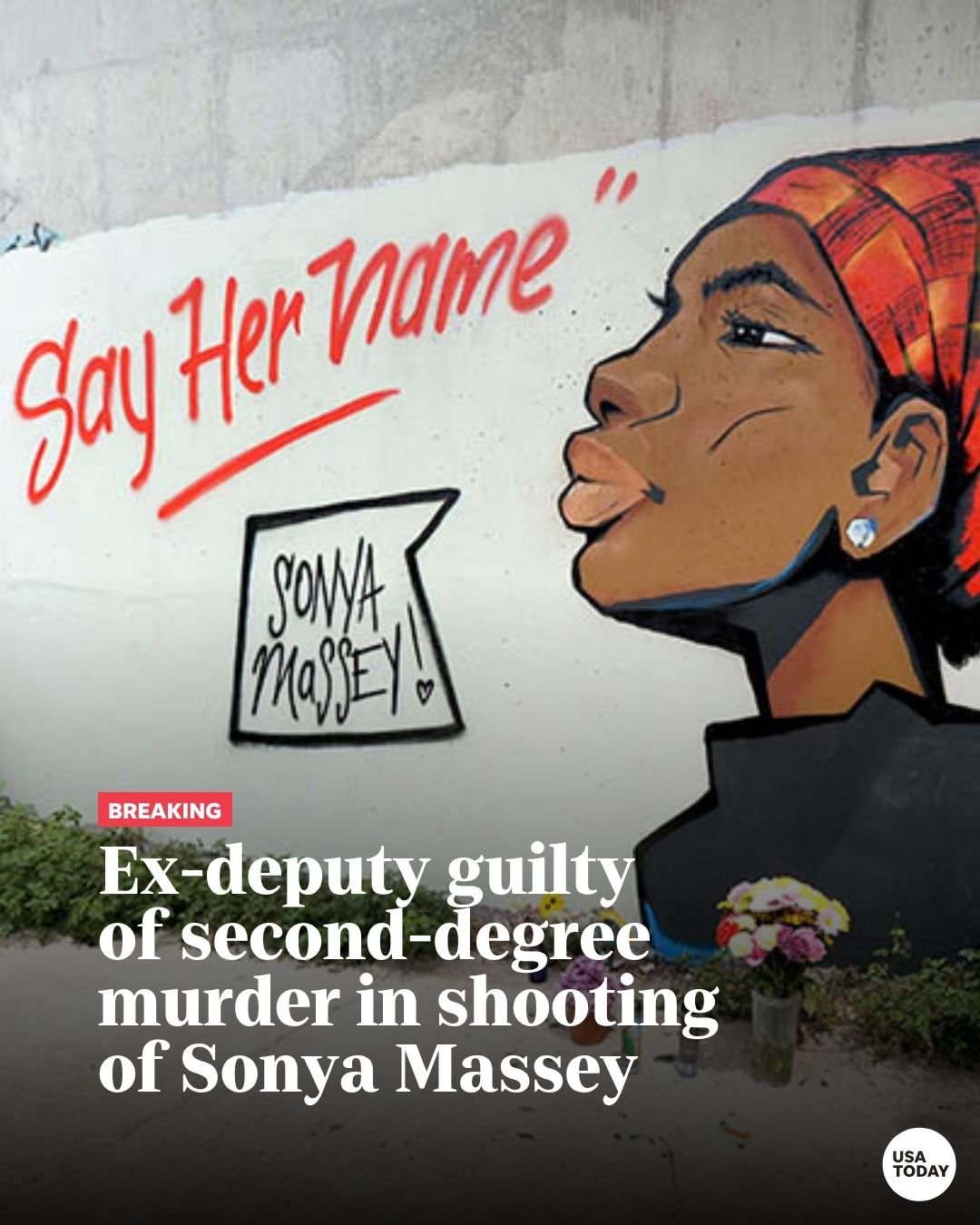
⚖️ Ex-Deputy Found Guilty of Murder in the Fatal Shooting of Sonya Massey
💔 A Verdict That Echoes Across America
More than a year after the fatal shooting of Sonya Massey, justice has finally begun to take shape.
A jury in Peoria, Illinois, found former sheriff’s deputy Sean Grayson, 31, guilty of second-degree murder in Massey’s death—a case that ignited protests, federal investigations, and renewed calls for police reform.
The decision came after two days of deliberations and months of emotional testimony.
Grayson, originally charged with first-degree murder, now faces up to 20 years in prison. His sentencing is scheduled for January 29, 2026.
🕊️ Who Was Sonya Massey?
Sonya Massey was a 36-year-old Black mother of two living in Springfield, Illinois. Her family describes her as warm, caring, and deeply devoted to her children.
She had struggled with mental health issues and lupus, an autoimmune disease that can affect memory and behavior. Despite these challenges, relatives say she remained a “happy person who always helped others.”
Massey’s death on July 6, 2024, was both senseless and tragic—an outcome that family members say could have been avoided if police had shown compassion and restraint.
🚨 What Happened the Night Sonya Massey Died
On that night, Massey called 911 to report a possible intruder.
Deputies Sean Grayson and another officer responded to her home. Body-camera footage later revealed the disturbing moments that led to her death.
Inside her kitchen, Massey stood near a pot of boiling water. Grayson ordered her to remove it from the stove.
Moments later, she said softly:
“I rebuke you in the name of Jesus.”
Grayson warned her not to throw the water, threatening to shoot.
“OK, I’m sorry,” Massey replied.
Seconds later, Grayson fired three times—one bullet struck Massey in the face, killing her instantly.
Prosecutors argued that she posed no threat and that Grayson escalated the situation unnecessarily.
⚖️ The Trial: Justice Meets Accountability
During the trial, prosecutors painted a devastating picture of Grayson’s reckless behavior, describing his use of force as “excessive and unjustified.”
They called multiple police experts who testified that Grayson’s actions violated basic de-escalation training.
Even his own partner, who stood nearby during the incident, told the jury that he “did not feel threatened” by Massey.
The prosecution’s closing argument echoed across the courtroom:
“Those were the last words Sonya Massey said before the defendant murdered her, just like he said he was going to.”
Grayson took the stand in his own defense, claiming self-defense and saying he feared Massey would throw boiling water at him. He admitted he considered using his Taser but decided against it.
Ultimately, jurors rejected his claim.
🧾 A Troubling Record of Misconduct
The case also exposed serious flaws in law enforcement hiring and oversight.
After the shooting, investigations revealed Grayson’s troubling history:
- Two prior DUIs
- A discharge from the U.S. Army for “serious misconduct”
- Multiple citizen complaints and warnings from fellow officers
These red flags had been overlooked when he was hired by the Sangamon County Sheriff’s Office.
Within weeks of the shooting:
- Grayson was fired and charged with murder.
- Sheriff Jack Campbell resigned after pressure from Illinois Gov. J.B. Pritzker.
- The U.S. Department of Justice launched a federal probe into the department’s practices.
In February 2025, Sangamon County agreed to a $10 million settlement with Massey’s family—the largest in county history.
🕯️ “A Measure of Justice,” Says Family Attorney Ben Crump
Civil rights attorneys Ben Crump and Antonio Romanucci, who represented Massey’s family, released a joint statement following the verdict:
“While we hoped for a first-degree murder conviction, this verdict represents a measure of justice for Sonya. Accountability has begun, and we now hope the court will impose a meaningful sentence that reflects the life that was lost.”
They vowed to continue pushing for nationwide reforms to protect people in crisis from police violence.
💬 The Bigger Picture: Mental Health and Policing
Sonya Massey’s story highlights the urgent need for mental health crisis training in law enforcement.
She had contacted a local mobile crisis team three times in the two weeks before her death—clear evidence she needed help, not aggression.
Her death mirrors similar tragedies across the U.S., where individuals experiencing mental health crises are too often met with force instead of care.
🌎 A Turning Point for Police Reform?
In the wake of the verdict, Springfield officials have committed to overhauling police training and hiring standards, ensuring stricter background checks and better crisis-response practices.
For many, the ruling marks a small but significant step toward accountability—but true justice, they say, will come only when systemic change prevents another life like Sonya Massey’s from being lost.
💔 Remembering Sonya
Family members describe Sonya as the “heart of every family barbecue,” always smiling, always serving others. Her cousin Crystal Chalmers told USA TODAY:
“She was just a happy person all around. I’ve never seen her angry. She would help anyone who needed it.”
As the community continues to mourn, her name now stands alongside those of others whose deaths have forced America to confront its policing system—and its failures.
