
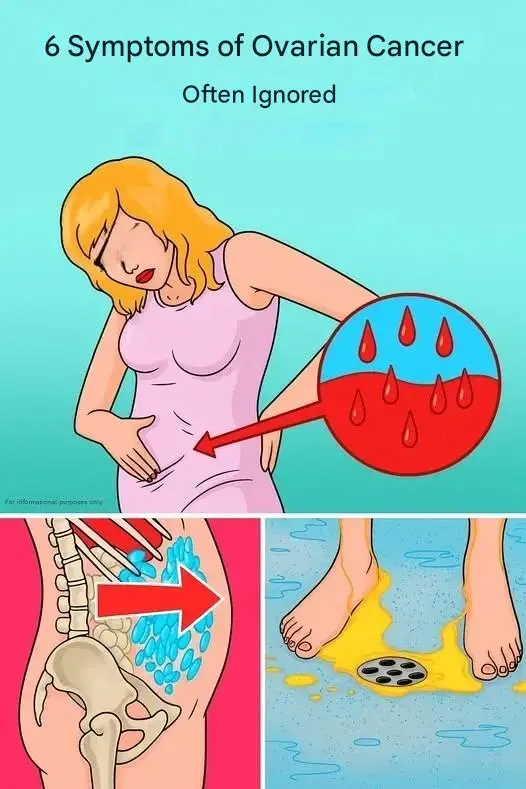
6 Often Overlooked Symptoms of Ovarian Cancer
Ovarian cancer is often called the “silent killer.” Why? Because its early symptoms are easy to ignore — or mistake for something else. Many women go months or even years without realizing what’s really happening inside their bodies.
The truth is, catching ovarian cancer early can make a world of difference. But that’s only possible if you know the warning signs — even the subtle ones that don’t seem serious at first.
Let’s uncover the six often overlooked symptoms of ovarian cancer that every woman should be aware of. Because sometimes, awareness can truly save a life.
1. Persistent Bloating That Doesn’t Go Away
Almost every woman experiences bloating once in a while. But if it becomes persistent, painful, or constant — even when you eat healthy or exercise — it might be something more.
Ovarian cancer can cause fluid buildup in the abdomen, leading to ongoing bloating or a feeling of fullness. If your clothes suddenly feel tighter around your waist for no clear reason, it’s worth mentioning to your doctor.
2. Unexplained Abdominal or Pelvic Pain
Occasional cramps can be normal, especially during menstruation. But chronic pelvic or abdominal pain that lasts for weeks is not something to ignore.
Many women describe it as a dull ache or pressure deep in the lower belly. It may come and go, or feel worse over time. This discomfort can signal inflammation or pressure caused by an ovarian mass.
3. Feeling Full Too Quickly or Loss of Appetite
If you start feeling full after just a few bites or lose your appetite altogether, that’s another subtle symptom of ovarian cancer.
The growing tumor can press against the stomach or digestive tract, making you feel full sooner than usual. This change can lead to unintentional weight loss or fatigue from not eating enough.
4. Changes in Urination Habits
Do you feel like you need to urinate more often, or have trouble emptying your bladder fully? Many women think this is just a sign of aging or drinking too much water — but it can actually be linked to ovarian cancer.
The tumor’s growth can press on the bladder, leading to frequent urination or urgency. If this happens suddenly and consistently, and isn’t related to an infection, you should get it checked.
5. Irregular Menstrual Cycles or Post-Menopausal Bleeding
While ovarian cancer is more common after menopause, younger women are not exempt. Any unexplained bleeding, spotting, or cycle changes — especially after menopause — can be a red flag.
It doesn’t always mean cancer, but it’s a sign that something is off with your reproductive system and needs medical attention. It’s always better to check early rather than wait and worry later.
6. Fatigue and Low Energy That Won’t Go Away
We all feel tired sometimes — work, stress, and family life can take their toll. But the fatigue associated with ovarian cancer feels different. It’s constant, deep, and unrelenting.
Even after resting or sleeping well, you still feel drained. This kind of exhaustion can come from your body working overtime to fight off inflammation or changes caused by cancer cells.
Why Early Detection Matters So Much
Ovarian cancer is far more treatable when caught early. Unfortunately, because the symptoms are often mistaken for digestive or hormonal issues, over 70% of cases are diagnosed at an advanced stage.
That’s why it’s crucial to listen to your body. If these symptoms persist for more than two weeks, don’t brush them off. Talk to your healthcare provider, get checked, and request the necessary scans or blood tests.
What You Can Do Today
Here are a few simple but powerful steps you can take:
- Track your symptoms — write down how long they last and how severe they feel.
- Don’t self-diagnose — bloating or fatigue can be caused by many things, but it’s important to rule out serious ones.
- Ask for a CA-125 test if your doctor suspects ovarian issues — it can help detect abnormal protein levels linked to ovarian cancer.
- Stay informed — the more you know, the faster you can act if something feels off.
Listen to Your Body — It Knows Before Anyone Else
Sometimes, your body whispers before it screams. A subtle change, a strange discomfort, a new habit of feeling tired — these are not coincidences. They’re signs.
By paying attention to the early symptoms of ovarian cancer, you can take control of your health and your future. Awareness doesn’t create fear — it creates power.
Don’t wait for tomorrow to care for yourself today. If something doesn’t feel right, talk to your doctor. Early detection saves lives — and it could save yours.
