
The Science of Hugs: How a Simple Embrace Can Boost Your Immune System
Sometimes, the smallest gestures have the biggest impact. A hug — something so simple, so human — might actually help protect you from getting sick. Sounds unbelievable? Science says otherwise.
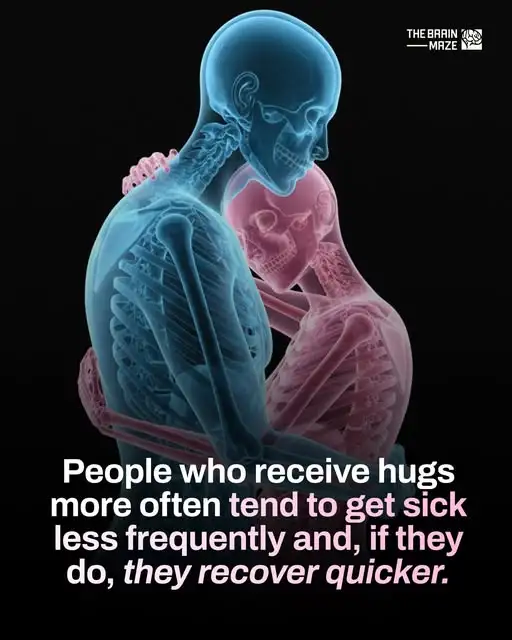
Researchers from Carnegie Mellon University discovered something remarkable: people who receive hugs more often are less likely to catch colds and recover faster when they do. In a world where stress, isolation, and illness seem to go hand in hand, this finding reminds us that genuine human connection is more powerful than we think.
The Science Behind the Healing Power of Hugs
In a study of over 400 adults, psychologists exposed participants to a common cold virus. Those who reported frequent hugging and strong social support were not only less likely to get sick, but when they did, their symptoms were milder and recovery came sooner.
Why? Because hugging doesn’t just feel good — it’s a biological signal of safety. When we embrace someone we trust, our body releases oxytocin, often called the “love hormone.” This chemical lowers levels of cortisol (the stress hormone), reduces blood pressure, and boosts the immune system’s response.
In short: a hug is medicine — no prescription required.
How Hugs Affect Your Mind and Body
When you hug someone, your body instantly reacts. Heart rate slows down, tension melts, and your brain releases a cocktail of chemicals — oxytocin, serotonin, and dopamine — that make you feel calmer, happier, and more connected.
This chemical shift not only brightens your mood but also strengthens your body’s defense system. Chronic stress weakens immunity and makes us more vulnerable to infections. By reducing stress through touch, hugging acts as a natural shield against sickness.
1. Hugs Lower Stress Hormones
Prolonged stress floods your body with cortisol, weakening your immune defenses. Frequent hugs help regulate this hormone, keeping your stress response balanced and your body stronger against illness.
2. Hugs Strengthen the Immune System
Studies show that touch activates the body’s parasympathetic nervous system, which supports immune function. In other words, your body literally “heals” when you feel safe and cared for.
3. Hugs Improve Heart Health
Hugging slows your heartbeat and lowers blood pressure. This calm state reduces strain on your cardiovascular system — another reason why human touch is vital for both mental and physical health.
Hugging as a Natural Antidepressant
Ever noticed how a hug can make a bad day seem a little better? That’s not just emotion — it’s chemistry. Oxytocin, released during hugging, is a powerful natural antidepressant. It helps lower anxiety, builds trust, and promotes emotional stability.
In times of loneliness or conflict, hugging can bridge emotional gaps. It’s the body’s way of saying, “You’re not alone. You’re safe.” That sense of belonging strengthens both mental resilience and physical well-being.
Why Physical Touch Matters in a Digital World
We live in a time where most connections happen through screens. Yet no message, emoji, or video call can replicate the power of real human touch. The warmth of a hug activates brain pathways that no text message ever could.
Touch is how humans communicate comfort and trust. From a parent soothing a child to a friend offering support — physical contact has always been our most primal form of care. When that’s missing, our mental and physical health both suffer.
The Hidden Cost of Isolation
During periods of social distancing or emotional withdrawal, many people unknowingly experienced “touch starvation.” This lack of physical contact increases stress, lowers immunity, and can even contribute to depression.
That’s why small gestures — a friendly hug, a comforting pat on the back — are so essential. They remind the body it’s safe, loved, and connected.
How Many Hugs Do You Need a Day?
According to family therapist Virginia Satir, “We need four hugs a day for survival, eight for maintenance, and twelve for growth.” While that number might vary from person to person, the message is clear: the more genuine connection we share, the healthier we become.
Here’s a quick guide to making hugs part of your daily wellness routine:
- Start your day with a hug. Whether it’s your partner, child, or even a pet, it sets a positive tone.
- End conflicts with connection. A hug can communicate forgiveness faster than words.
- Use hugs as medicine. When a loved one is sad, anxious, or sick, a hug can literally help them heal.
Can Hugging Really Keep You from Getting Sick?
According to the Carnegie Mellon study, yes — at least to some degree. People who had strong social relationships and received frequent hugs showed fewer cold symptoms and faster recovery. The protective effect comes from reduced stress, better emotional regulation, and a stronger immune response.
Think of hugs as a form of “emotional immunity.” When you feel connected, your body operates more efficiently. When you feel lonely or isolated, stress wears down that natural armor. So while hugs aren’t a replacement for medical care, they’re a surprisingly powerful part of preventive health.
The Takeaway: Healing Is Human
We often look for complex solutions to feel better — supplements, diets, detoxes — but sometimes, the answer is much simpler. A genuine embrace, a moment of shared warmth, can do what no pill can: remind us that we’re cared for, connected, and alive.
So, the next time someone you love needs comfort — or even if you just want to feel a little stronger — don’t underestimate the power of a simple hug.
Because sometimes, healing starts with human touch.
Source: Carnegie Mellon University (2014), Psychological Science.
