
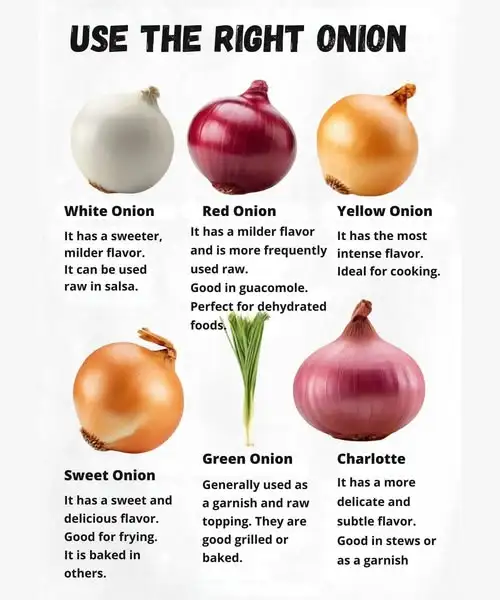
Use the Right Onion for Each Dish: A Simple Secret to Transform Every Meal
Ever wonder why some homemade dishes taste flat while others burst with flavor? The secret might be sitting right on your kitchen counter: the onion.
Onions are one of the most used ingredients in the world. Yet, not all onions are created equal. Each type—white, red, yellow, sweet, green, and shallot—brings its own aroma, texture, and flavor profile. Choosing the right onion for each dish can turn an ordinary recipe into a restaurant-worthy experience.
Why Onions Matter More Than You Think
Onions are the foundation of countless dishes, from hearty stews to delicate salads. They bring balance—sweetness, sharpness, and depth—that ties all the ingredients together.
But here’s the catch: using the wrong onion can completely change your meal. Too pungent, and your dish becomes harsh. Too mild, and it falls flat. That’s why understanding the personality of each onion type is the key to elevating your cooking.
1. White Onions: The Gentle All-Rounder
Flavor: Sweet and mild
Best for: Sauces, stir-fries, salsas, and Mexican dishes
White onions have a clean, subtle flavor that blends seamlessly into dishes without overpowering them. They’re perfect when you want onion presence without sharpness. Their slightly sweet nature makes them ideal for creamy sauces or stir-fries where harmony is key.
Try this: Dice white onions into a homemade guacamole or lightly sauté them for a creamy mushroom pasta. They soften beautifully and add a mild sweetness that enhances rather than dominates.
2. Red Onions: Colorful and Crunchy
Flavor: Crisp, slightly spicy when raw, sweeter when cooked
Best for: Guacamole, salads, sandwiches, and pickles
Red onions are the extroverts of the onion world—vibrant, crunchy, and packed with flavor. Their beautiful color makes any dish look fresh and appetizing. When raw, they bring a gentle heat; when cooked, they mellow into sweetness.
Pro tip: Soak sliced red onions in cold water for 10 minutes before using in salads to tone down their bite while keeping their crunch.
3. Yellow Onions: The Classic Cooking Companion
Flavor: Bold, deeply savory
Best for: Soups, stews, dips, and caramelized onions
When you picture the aroma of onions sizzling in butter, it’s usually the yellow onion doing the magic. These are your go-to for slow-cooked recipes where their strong flavor can mellow and sweeten over time.
They’re the heart of French onion soup, the backbone of your Sunday stew, and the secret behind golden, caramelized onions that make burgers irresistible.
4. Sweet Onions: Gentle and Golden
Flavor: Mild, juicy, and sugary
Best for: Frying, roasting, and onion rings
Sweet onions (like Vidalia or Walla Walla) are famous for their low sulfur content, which makes them less pungent and beautifully sweet. They shine when roasted with vegetables or fried to golden perfection.
Try this: Slice thick rings of sweet onion, coat in batter, and fry until crisp. The natural sugars caramelize, creating the most irresistible onion rings you’ll ever taste.
5. Green Onions: The Fresh Finisher
Flavor: Fresh, light, and grassy
Best for: Garnishing soups, grilling, stir-fries, and salads
Also known as scallions, green onions are a cook’s secret weapon for freshness. Both the white base and green tops are edible, each offering a slightly different flavor. Use them to brighten up soups, tacos, or even scrambled eggs.
Tip: Grill whole green onions until slightly charred for a smoky, delicate side that complements any grilled meat.
6. Shallots: The Sophisticated Choice
Flavor: Delicate, slightly sweet, with a hint of garlic
Best for: Salad dressings, vinaigrettes, sauces, and fine dining dishes
Shallots are the refined cousin of the onion family. Their mild, complex taste makes them perfect for sauces where balance is key—think vinaigrettes, beurre blanc, or creamy pan sauces.
They cook quickly and add subtle sweetness without overpowering other ingredients. They’re small, but mighty when it comes to elevating your dishes with a touch of elegance.
How to Choose and Store Onions
When selecting onions, look for ones that are firm, dry, and free from soft spots. Avoid any with green shoots—they’re past their prime. Store them in a cool, dry, and ventilated space (not the fridge) to keep them fresh longer.
Pro tip: Sweet onions have higher water content, so they don’t last as long. Use them within a week or two for the best flavor.
The Right Onion Can Change Everything
Choosing the right onion for each dish isn’t just about following recipes—it’s about crafting experiences. A sweet onion can turn a roast into comfort food, while a sharp red onion adds life to a salad. It’s these small decisions that bring depth and character to your cooking.
So next time you reach for an onion, take a moment to ask: What story do I want my dish to tell?
Final Thoughts
Every meal begins with a choice, and sometimes that choice is as simple as which onion to slice. By understanding their flavors, you’ll start cooking with intention—and every bite will taste a little more alive.
Use the right onion, and you’ll taste the difference in every dish.
Ready to experiment? Grab your cutting board, pick your onion, and let the flavors lead the way.
