
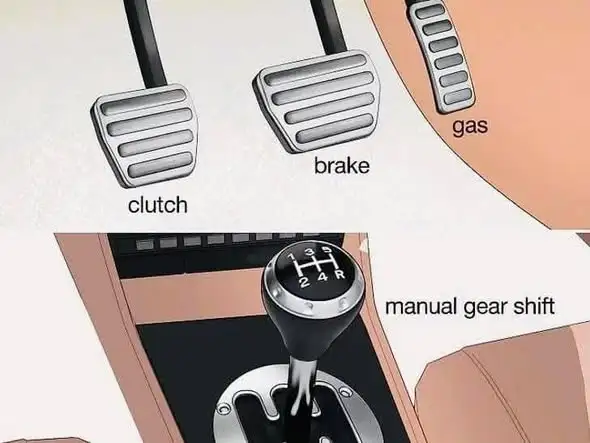
Manual Car Gear Shifting, Clutch, Brake, and Race Explained — Step-by-Step Guide for Beginners
Learning to drive a manual car is one of those skills that gives you real control — the feeling of power, timing, and precision all in your hands (and feet). But for many beginners, understanding how the clutch, gear, brake, and accelerator work together can feel confusing at first.
The good news? Once you understand the rhythm and coordination behind manual car gear shifting, it becomes second nature. This step-by-step guide will help you master the basics — from starting the car to shifting gears smoothly and stopping with confidence.
1. Starting the Car in 1st Gear
Every manual driving lesson begins with this crucial step: starting smoothly without stalling. Here’s how to do it right:
- Step 1: Press the clutch pedal fully to the floor before starting the engine. This disengages the engine from the wheels.
- Step 2: Move the gear lever into 1st gear.
- Step 3: Gently press the accelerator (race pedal) while slowly releasing the clutch. The point where you feel the car start to move is called the “bite point.”
- Step 4: Once the car begins rolling, gradually release the clutch completely while maintaining light pressure on the accelerator.
Pro tip: The key here is patience. Don’t rush the clutch release — your left foot should move slowly and smoothly. This prevents jerks or engine stalling.
2. Shifting from 1st to Higher Gears (2nd, 3rd, 4th, 5th)
As the car gains speed, you’ll need to shift up through the gears to maintain efficiency and smooth acceleration. Follow these simple steps:
- Step 1: Accelerate slightly before changing gears — listen to the engine’s sound or check the RPM (around 2000–2500 is ideal for shifting).
- Step 2: Press the clutch pedal fully.
- Step 3: Move the gear stick to the next gear (from 1st to 2nd, 2nd to 3rd, etc.).
- Step 4: Gently release the clutch while adding light pressure to the accelerator for a smooth gear transition.
Repeat this process as you move to higher gears. With practice, your hands and feet will work together seamlessly — it becomes muscle memory.
When to Shift Gears
In most manual cars, the ideal time to shift gears depends on engine sound and speed:
- 1st to 2nd: around 15–20 km/h
- 2nd to 3rd: around 30–40 km/h
- 3rd to 4th: around 50–60 km/h
- 4th to 5th: 70+ km/h
These are approximate ranges — every car feels slightly different, so learn to “listen” to your engine.
3. Downshifting (Higher to Lower Gear)
Sometimes you’ll need to slow down or prepare for a turn, which requires downshifting. This is just as important as shifting up.
- Step 1: Gently press the brake pedal to reduce speed.
- Step 2: Press the clutch fully.
- Step 3: Shift the gear stick down to a lower gear (for example, from 4th to 3rd, or 3rd to 2nd).
- Step 4: Release the clutch gradually while applying light pressure on the accelerator. This synchronizes engine speed with the lower gear.
Downshifting helps you maintain control, especially when going downhill or overtaking. It also prevents unnecessary wear on your brakes.
4. Stopping the Car
Stopping a manual car smoothly takes coordination. Follow these steps:
- Step 1: Press the brake to reduce speed.
- Step 2: As you near a complete stop (around 10 km/h or lower), press the clutch fully to prevent stalling.
- Step 3: Once stopped, shift the gear to neutral and release both clutch and brake pedals.
If you’re stopping on an incline, use the handbrake to prevent rolling backward before starting again.
5. Key Tips for Smooth Gear Shifting
1. Timing Is Everything
Shifting too early can make the engine struggle, while shifting too late can over-rev it. Aim for smooth transitions around 2000–2500 RPM for petrol cars, or 1500–2000 RPM for diesel cars.
2. Balance the Clutch and Accelerator
The golden rule: smooth coordination. Don’t release the clutch too quickly, and don’t floor the accelerator suddenly. Balance both for a smooth, jerk-free drive.
3. Practice Makes Perfect
Every car has a different clutch feel and gear ratio. Spend time practicing in a quiet area to understand your car’s rhythm. Once you get it, manual driving feels incredibly satisfying — like you and the car are in sync.
6. Common Mistakes Beginners Make
- Riding the clutch: Keeping your foot half-pressed on the clutch wears it out quickly.
- Skipping gears: Avoid jumping directly from 2nd to 4th unless you’re experienced — it can strain the gearbox.
- Over-revving: Shifting too late wastes fuel and wears down the engine.
- Not using the handbrake: On slopes, always engage the handbrake before starting.
7. The Beauty of Manual Driving
Once you get the hang of it, manual driving feels alive. You feel every rev, every shift, every pulse of the road beneath your feet. It’s a dance of mechanics and muscle memory — where timing, control, and focus come together in perfect balance.
Unlike automatic cars, a manual transmission gives you full command over performance. You decide when to shift, how to accelerate, and how much power to deliver. It’s pure driving in its most authentic form.
Final Thoughts
Learning how to shift gears manually may seem intimidating at first, but it’s one of the most rewarding driving skills you’ll ever master. Once you feel that smooth take-off in first gear, that crisp upshift into second — it’s hard not to fall in love with the process.
So find a safe open space, start slow, and practice these steps until they feel natural. Soon, driving manual won’t feel like a task — it’ll feel like freedom.
Happy driving — and may every shift be smooth!
