
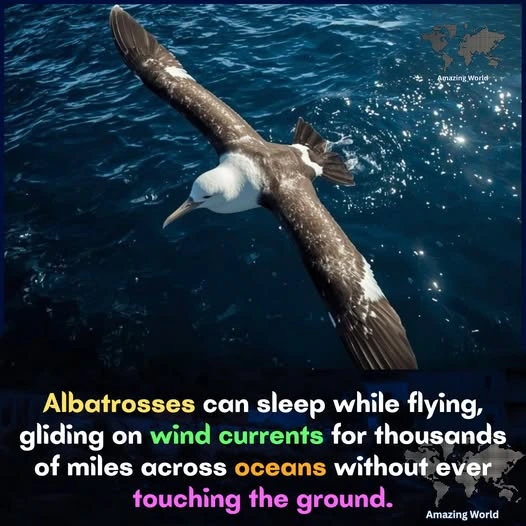
The Albatross: The Bird That Can Sleep While Flying Across Oceans
Imagine drifting through the endless blue sky, gliding effortlessly over rolling ocean waves, and falling asleep mid-flight — without ever touching the ground. Sounds impossible, right? But for the albatross, this is just another day in the sky.
The albatross is one of nature’s most extraordinary birds. With its massive wingspan and unmatched endurance, it has mastered the art of flight in ways few creatures can rival. These majestic seabirds can soar across entire oceans, sleeping on the wing and navigating vast distances with grace and precision.
🌊 The Masters of the Open Sky
Albatrosses are known for their breathtaking ability to travel thousands of miles across open seas without stopping. They are built for long-distance flight — with wingspans reaching up to 11 feet, the largest of any living bird on Earth.
Using a technique called dynamic soaring, they harness the power of the wind to stay airborne. By gliding between layers of air with different wind speeds, they barely need to flap their wings. This allows them to travel for hours — sometimes even days — without using much energy at all.
In simple terms, albatrosses let the wind do the work. While other birds tire themselves with constant wingbeats, the albatross rides invisible highways in the sky, conserving energy and covering vast distances with ease.
😴 Yes, They Really Sleep While Flying
One of the most fascinating facts about albatrosses is that they can actually sleep while flying. Scientists have long been intrigued by this behavior — how can a bird stay safe, navigate, and rest at the same time?
Through studies using tracking devices and brainwave monitoring, researchers discovered that albatrosses enter short periods of rest while gliding. These “micro-sleeps” last just a few seconds or minutes, allowing one part of the brain to stay alert while the other rests.
This is known as unihemispheric slow-wave sleep — a rare ability that allows certain animals, including dolphins and some bird species, to sleep with one half of their brain at a time. For albatrosses, it’s a life-saving adaptation that lets them rest during long oceanic flights where landing is impossible.
🌬️ The Secret of Effortless Flight
Watching an albatross in motion is like watching poetry in flight. It rarely flaps its wings, instead using the wind’s energy to keep gliding for hours. By dipping close to the ocean’s surface and then rising again into stronger winds, it gains speed and altitude effortlessly — a maneuver known as dynamic soaring.
This technique is so efficient that scientists have studied it for decades to improve the design of drones and aircraft. The albatross shows us that nature has already perfected the art of aerodynamic travel long before humans ever dreamed of flying.
🍽️ Life Over the Open Ocean
Albatrosses spend most of their lives far from land, soaring over the world’s windiest and wildest oceans. They only return to solid ground to breed and raise their chicks, often on remote islands scattered across the Southern Hemisphere.
Their diet mainly consists of fish, squid, and krill. With their keen eyesight and excellent sense of smell, they can detect prey even from great distances. Some species have been known to follow fishing vessels for miles, waiting for scraps or discarded fish.
Despite their nomadic lifestyle, albatrosses form strong, lifelong bonds with their mates. Once paired, they return to the same nesting site year after year, performing elaborate courtship dances that can last for hours — a beautiful display of loyalty and connection.
🌍 Why the Albatross Is So Important
Beyond their incredible flying abilities, albatrosses play a crucial role in marine ecosystems. As top predators, they help maintain balance in the food chain and act as indicators of ocean health. Scientists often study them to monitor changes in fish populations, pollution, and climate patterns.
Sadly, these magnificent birds face serious threats. Many albatross species are endangered due to plastic pollution, overfishing, and longline fishing practices. Thousands die each year after becoming accidentally caught on fishing hooks or ingesting plastic debris mistaken for food.
💔 A Symbol of Freedom — and Fragility
The image of an albatross soaring endlessly over the ocean has become a symbol of freedom and endurance. In literature and poetry, it often represents both the beauty and the burden of life — a reminder of our connection to nature and our responsibility to protect it.
When we see an albatross, we’re not just looking at a bird — we’re witnessing evolution’s masterpiece, a living example of how adaptation and resilience can conquer even the harshest environments.
🔬 What We Can Learn from the Albatross
Albatrosses remind us that sometimes, the best way to move forward is to flow with the wind rather than fight against it. Their effortless flight teaches us the power of patience, timing, and trust in nature’s rhythm.
In a world that often rewards constant effort and motion, the albatross shows that efficiency — not speed — is the real key to endurance. Whether you’re flying across an ocean or navigating life’s challenges, there’s wisdom in knowing when to glide and when to soar.
✨ Conclusion: Nature’s Greatest Aviator
The albatross is more than just a bird — it’s a marvel of natural engineering, an explorer of the winds, and a gentle reminder that rest and movement can coexist in perfect harmony.
From sleeping while flying to navigating invisible air currents with ease, these seabirds prove that the natural world is filled with miracles waiting to be discovered.
So the next time you feel tired, rushed, or lost, think of the albatross — sleeping mid-flight, trusting the wind, and gliding endlessly toward the horizon.
#Albatross #WildlifeFacts #NatureWonder #OceanBirds #SleepWhileFlying
