
The Neuroscience of Anger: How Staying Calm Rewires Your Brain
Have you ever said or done something in anger and immediately regretted it? That moment when your heart races, your face gets hot, and logic seems to disappear? Science now shows that it’s not just “losing your temper” — it’s your brain in battle.
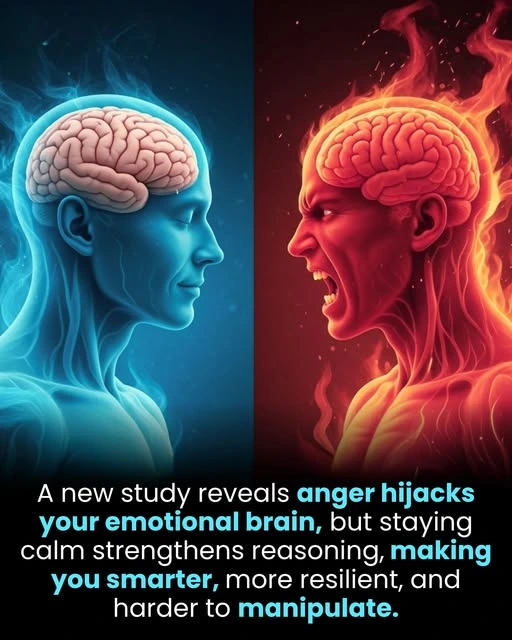
According to Frontiers in Psychology (2023), anger isn’t merely an emotion. It’s a fight between two powerful brain systems — the emotional brain and the thinking brain. And every time you choose calm over chaos, you’re not just being mature… you’re literally rewiring your mind for strength and self-control.
What Happens in Your Brain When You’re Angry
When anger takes over, the amygdala — part of your emotional brain — goes into overdrive. It’s the same system that triggers your fight-or-flight response. In that instant, your body floods with adrenaline, your heart rate spikes, and your brain prepares for conflict.
The problem? This “emotional takeover” shuts down your prefrontal cortex — the rational part of your brain responsible for judgment, planning, and self-control. You stop thinking clearly and start reacting impulsively.
This is why anger can make smart people say foolish things, or calm people suddenly lash out. It’s not weakness — it’s biology.
The Battle Between the Emotional Brain and the Thinking Brain
Think of your brain like a seesaw. On one end sits the emotional brain (amygdala), quick and reactive. On the other sits the thinking brain (prefrontal cortex), calm and deliberate. When anger rises, the seesaw tips toward emotion — and logic slides out of reach.
But here’s the good news: you can train your brain to rebalance that seesaw faster. Neuroscientists call it emotional regulation — the ability to pause, breathe, and respond thoughtfully rather than react instinctively.
Each moment of restraint strengthens the neural connections between your emotional and thinking centers. Over time, this practice builds a more resilient, self-aware brain.
Staying Calm Is Brain Training
Every time you resist the urge to snap or lash out, you’re doing something extraordinary. You’re reinforcing the pathways that connect the prefrontal cortex (logic) to the amygdala (emotion). It’s like lifting weights for your self-control muscle.
This process — called neuroplasticity — is how your brain learns and adapts. By choosing calm repeatedly, you create new wiring that makes it easier to stay composed next time. Eventually, your default response shifts from reactivity to clarity.
In other words: staying calm isn’t weakness — it’s brain strength in action.
How Anger Impacts Judgment and Decision-Making
When the emotional brain dominates, it distorts how we perceive the world. A small disagreement suddenly feels like a major betrayal. A minor inconvenience feels personal. Our focus narrows, and we make decisions based on temporary feelings rather than long-term goals.
Studies show that in states of high anger, people are more likely to:
- Misinterpret neutral expressions as hostile
- Take unnecessary risks or make impulsive choices
- Say or do things that harm relationships
- Be influenced by emotional manipulation or provocation
That’s why keeping your cool isn’t just about emotional maturity — it’s a form of self-protection. A calm brain is harder to manipulate, less reactive, and far more strategic.
The Power of the Prefrontal Cortex
Your prefrontal cortex is like the wise mentor of your mind. It’s responsible for reasoning, problem-solving, empathy, and future planning. When it’s active, you can see the bigger picture, manage stress effectively, and make choices aligned with your values.
However, the prefrontal cortex goes offline when anger floods the system. It’s like trying to open a spreadsheet while your computer is overheating — the system can’t handle both emotion and logic at full power. That’s why calming techniques matter: they cool down your mental “CPU” and bring the thinking brain back online.
Practical Ways to Strengthen Your Calm
Neuroscience isn’t just theory — it’s practical. Here are a few simple ways to train your brain for calm under pressure:
1. Pause Before You React
When you feel anger rise, pause. Count to five, take a deep breath, or even step away for a minute. This short break gives your prefrontal cortex time to regain control.
2. Breathe Intentionally
Deep, slow breathing signals to your brain that you’re safe. It reduces the amygdala’s alarm response and allows rational thought to return. Try the 4-7-8 technique: inhale for 4 seconds, hold for 7, exhale for 8.
3. Reframe the Situation
Ask yourself: “What else could this mean?” Often, our anger comes from assumptions. Reframing helps engage your thinking brain and dissolve emotional triggers.
4. Practice Daily Calm
Meditation, journaling, or even mindful walking can train your brain to stay steady. The more you practice calm in everyday life, the easier it becomes in high-stress moments.
Why Calm Makes You Harder to Manipulate
When you’re angry, your focus narrows — and that makes you easier to control. Marketers, political strategists, and even toxic people know that emotional reactivity clouds judgment. When you stay calm, you think clearly and see through manipulation.
This is why emotional intelligence is power. A calm mind isn’t passive — it’s perceptive. It’s what allows you to read the room, set boundaries, and make confident choices without getting swept away by emotion.
Calm as a Form of Intelligence
Modern neuroscience reframes calm not as a lack of passion, but as a higher form of intelligence. It’s emotional mastery — knowing how to feel deeply without being consumed by what you feel.
Each time you choose calm, you’re not just diffusing conflict — you’re upgrading your brain’s operating system. You become more aware, more thoughtful, and more in control of your life.
Final Thoughts: Rewiring Your Brain for Peace and Power
Anger will always be part of being human. It’s natural, it’s protective, and sometimes it’s justified. But when anger rules your actions, it rules your life. Neuroscience shows that staying calm isn’t about suppression — it’s about strength.
Every calm response strengthens your neural pathways for self-control. Every moment of awareness trains your mind to choose logic over impulse. And every deep breath is a quiet act of power.
So next time you feel the storm rising, pause. You’re not just calming down — you’re reshaping your brain, reclaiming your power, and choosing who you want to be.
Calm is not weakness. It’s intelligence in motion.
