
Stanford Scientists May Have Found a Way to Rejuvenate the Immune System — And It’s Hidden in Our Blood
Imagine being able to turn back your body’s biological clock — not with surgery, not with supplements, but by teaching your own cells how to act young again. It sounds like science fiction, but researchers at Stanford University may have just brought this dream a step closer to reality.
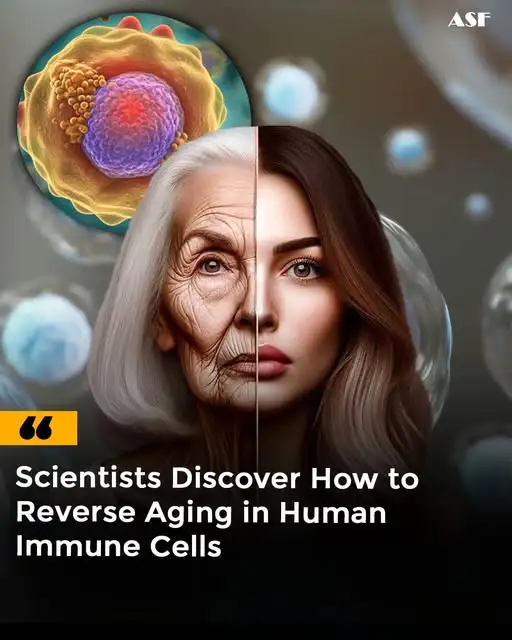
In a groundbreaking discovery, scientists have managed to restore aged immune cells to a youthful state using a process known as metabolic reprogramming. These rejuvenated cells performed as strongly as those from people 40 years younger — fighting infections with renewed energy and precision.
The implications of this are nothing short of revolutionary. Could the secret to longevity and healthy aging already be circulating within our veins?
The Science Behind the Discovery
As we age, our immune system gradually weakens. This process, called immunosenescence, is one of the key reasons older adults become more susceptible to infections, chronic inflammation, and slower recovery times. But what if aging wasn’t a one-way path?
Stanford researchers decided to explore whether old immune cells could be “taught” to behave like young ones again. Their focus was on metabolism — how cells process energy. In youthful immune cells, energy pathways are highly efficient, allowing them to respond quickly to threats. But as cells age, these pathways become sluggish and less responsive.
Through targeted metabolic reprogramming, scientists were able to reset these pathways, effectively making the cells function as if they belonged to a much younger body.
What Is Metabolic Reprogramming?
In simple terms, it’s like giving your cells a “software update.” Researchers adjusted how the immune cells used and converted energy, restoring their ability to identify and fight infections effectively.
The results were stunning: after treatment, these reprogrammed cells began performing just like those from people four decades younger. They moved faster, reacted better, and cleared pathogens with youthful strength.
This breakthrough suggests that aging at the cellular level isn’t irreversible — it can be modified, and potentially reversed, by changing how cells metabolize energy.
Why This Could Be the Key to Longevity
The immune system plays a crucial role in overall health. When it’s strong, it defends us from viruses, bacteria, and even cancer. But when it weakens, our entire body becomes more vulnerable to disease, fatigue, and chronic inflammation — the silent driver of aging.
By restoring immune cells to a youthful state, scientists may have uncovered a path toward healthier aging and extended lifespan. Unlike cosmetic fixes or external therapies, this approach works from the inside out — at the very heart of what keeps us alive.
It’s not about living forever. It’s about living longer, stronger, and healthier — with a body that feels decades younger than its age.
From the Lab to Real Life: What Comes Next?
While this discovery is still in the research phase, the potential applications are massive. The same metabolic techniques could one day be used to rejuvenate other aging cells — not just in the immune system, but across the body.
Imagine treatments that could refresh your organs, muscles, or even your brain — simply by reprogramming your body’s own cellular energy systems. This could lead to breakthroughs in combating conditions like:
- Age-related immune decline
- Chronic inflammation
- Neurodegenerative diseases
- Metabolic disorders
It’s a glimpse into a future where the aging process itself becomes something we can understand — and perhaps control.
The Ethical and Practical Questions
Of course, with great discovery comes great responsibility. The idea of reversing cellular aging raises ethical and scientific questions: How far should we go to extend human life? Could reprogramming cells carry unknown long-term risks?
Researchers emphasize that while the findings are exciting, much more testing is needed. Human biology is complex, and what works in the lab doesn’t always translate perfectly to the body. Still, the potential is too promising to ignore.
The Blood Connection — Why Our Own Bodies Hold the Clues
One of the most fascinating parts of this study is its focus on our own blood. For decades, scientists have suspected that certain factors circulating in young blood could help rejuvenate aging tissues. This new research supports that idea, showing that the answers to aging might already lie within us.
Instead of introducing foreign substances or artificial enhancements, the approach here uses the body’s own mechanisms to restore balance and vitality. It’s not about adding something new — it’s about unlocking what’s already there.
Aging Gracefully, with Science on Our Side
For centuries, humans have searched for the fountain of youth. From herbal potions to miracle diets, we’ve always wanted to slow time’s effects. Now, for the first time, science may be bringing us closer to that dream — not through fantasy, but through biology.
By understanding how our immune system ages, researchers can develop ways to rejuvenate our cells naturally. This means better protection against disease, faster recovery, and possibly even longer lifespans.
What This Means for the Future of Medicine
If the immune system can be reprogrammed to act young again, it could transform how we approach aging. Instead of treating age-related diseases after they appear, we might prevent them before they start.
This would mark a complete shift in modern medicine — from reactive to proactive. Instead of waiting for illness, we could maintain vitality well into our later years. The idea of being 80 but feeling 40 no longer sounds impossible.
Healthy Aging Starts Now
While we wait for this research to become a clinical reality, there are still ways to support your immune system naturally. Exercise, good sleep, balanced nutrition, and stress management all help preserve cellular energy — the same foundation this study is based on.
Think of it as taking care of your cells today, so they’ll take care of you tomorrow.
Final Thoughts: The Future of Youthful Immunity
The discovery at Stanford isn’t just another scientific headline — it’s a hopeful glimpse into a future where aging no longer means decline. By learning how to “teach” our cells to act young again, we may redefine what it means to grow old.
And perhaps the greatest part of this discovery is its simplicity. The secret to longer, healthier living might not be locked in a lab or hidden in an expensive treatment — it might already be flowing through your veins.
The key to longevity could be inside you — literally.
#AgingResearch #Immunology #StanfordScience #Longevity #HealthyLiving
