
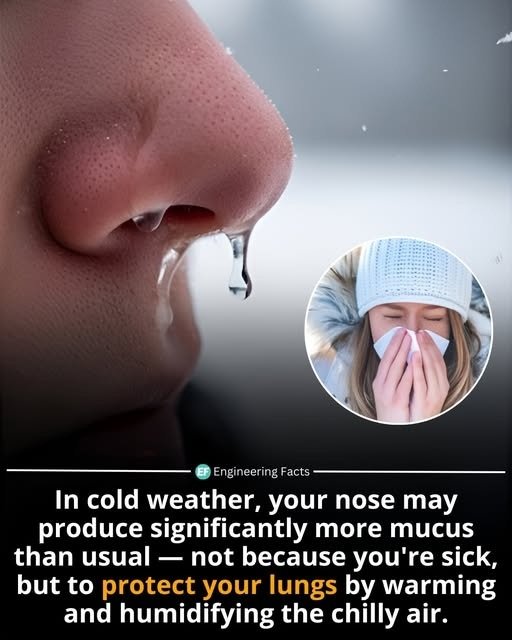
Why Your Nose Runs in Cold Weather (And Why That’s a Good Thing)
Ever stepped outside on a freezing morning and immediately felt your nose start to drip? You grab a tissue and assume you’re catching a cold — but here’s the surprising truth: that runny nose isn’t a sign of sickness. It’s actually your body’s built-in climate control system doing its job perfectly.
Yes, your nose is a highly sophisticated air filter and humidifier, designed to protect your lungs every time you take a breath. And in cold weather, it works even harder to keep things running smoothly.
The Science Behind the Runny Nose
When you breathe in cold, dry air, your nasal passages react instantly. The lining of your nose — called the nasal mucosa — starts producing extra mucus to warm, moisten, and filter the air before it travels down to your lungs. This process ensures that by the time air reaches your respiratory system, it’s comfortable, safe, and easy to breathe.
At the same time, tiny blood vessels inside your nose expand in response to the cold. This expansion increases blood flow, helping to heat the air you inhale. It’s your body’s way of preventing the lungs from being shocked by freezing temperatures.
So Why Does Your Nose Drip?
Here’s where it gets interesting: the air you breathe out is warm and moist. When that warm, humid air hits the cold environment outside, the water vapor condenses — just like your breath turns into fog on a cold day. That condensation mixes with the extra mucus your body produces, and voilà — your nose starts to run.
In fact, studies show that up to 50 milliliters of fluid per day can drip from your nose during exposure to cold weather. That’s your body’s way of maintaining balance and protecting itself from dryness and irritation.
Your Nose: A Natural Air Conditioner
Think of your nose as a built-in air-conditioning system — except instead of cooling, it warms and humidifies. It automatically adjusts to the conditions around you, fine-tuning each breath for maximum comfort and safety.
When it’s hot and humid, your nose helps cool and dry the air. When it’s cold and dry, it does the opposite — adding heat and moisture to make the air more lung-friendly. This process happens within milliseconds, without you even noticing.
Cold Weather and Nasal Blood Flow
One of the key players in this process is blood flow. The inside of your nose contains a network of tiny blood vessels that respond to temperature changes. In cold weather, these vessels dilate (expand) to release warmth, just like a mini heating system.
This extra blood flow not only warms the air but also triggers more mucus production, since moist air prevents your throat and lungs from drying out. It’s a beautiful example of how the human body constantly self-regulates to maintain equilibrium.
Why It’s Not a Sign of Illness
It’s easy to confuse a runny nose from the cold with a mild cold or allergy, but there are clear differences. A cold usually brings other symptoms like fatigue, sore throat, or coughing. A weather-related runny nose, however, typically clears up once you’re indoors and your body warms up.
Doctors even have a term for this — cold-induced rhinitis. It’s completely harmless, and rather than being a problem, it’s actually proof that your body’s defense system is working exactly as it should.
Fun Fact: You’re Not Alone!
According to research from the American College of Allergy, Asthma, and Immunology, about 50–60% of people experience cold-induced runny noses to some degree. It’s especially common in dry or windy climates, and even more noticeable when you’re exercising outdoors, since you’re breathing harder and faster.
How to Stay Comfortable in the Cold
Even though it’s a normal reaction, a runny nose can be annoying. Here are a few simple tips to reduce the drip while still letting your body do its job:
- Wear a scarf or mask over your nose and mouth — it helps trap moisture and warmth.
- Breathe through your nose instead of your mouth to keep air naturally filtered and humidified.
- Stay hydrated — drinking water helps your body produce healthy mucus and maintain humidity.
- Use a humidifier indoors to combat dry winter air.
When to See a Doctor
While a runny nose from the cold is perfectly normal, it’s worth paying attention if it comes with other symptoms — such as congestion that lasts more than 10 days, thick yellow or green mucus, or a persistent cough. Those signs may indicate an infection or allergy rather than simple cold-weather rhinitis.
Our Bodies Are Remarkably Smart
It’s easy to take small things like this for granted — but your body is constantly adapting, adjusting, and protecting you in ways you may not even notice. That dripping nose on a frosty morning isn’t a flaw or inconvenience; it’s evidence of how intelligently the human body is designed.
From regulating temperature to trapping bacteria, your nose is one of the body’s most underrated heroes. It’s not just there to smell — it’s there to safeguard every breath you take.
Final Thoughts
So the next time you step into the cold and your nose starts to run, don’t reach for a diagnosis — reach for appreciation. Your body is working hard to keep you safe, comfortable, and healthy.
That runny nose is proof of good engineering — and a reminder that nature always knows what it’s doing.
#HumanBody #ColdWeather #ScienceFacts #Biology #BodyMechanics
